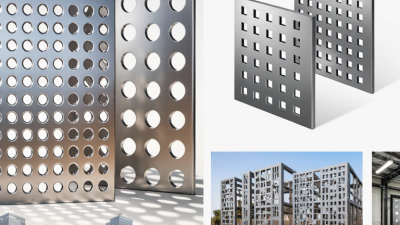
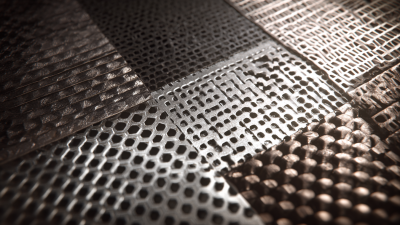
7 Tips for Choosing Perforated Metal Panels
Perforated Metal Panels can shape a façade’s appearance, airflow, daylight, and privacy. Choosing them well means looking beyond the sample in your hand. Hole size, open area, sheet thickness, alloy, finish, and support spacing all affect how a panel performs once installed. A small change in perforation pattern can alter both the view through the screen and the shadows it casts across a wall.
The U.S. Energy Information Administration’s 2018 Commercial Buildings Energy Consumption Survey counted about 5.9 million commercial buildings, covering roughly 97 billion square feet. That scale makes material choices consequential, even when one panel seems like a minor detail. Architect Louis Sullivan’s well-known principle, “form ever follows function,” offers a useful lens for the decision. It is not a perforated-panel specification; it is a reminder to connect appearance with purpose. Check the project’s exposure, required ventilation, cleaning access, and likely maintenance before comparing finishes or prices.
This guide’s seven tips focus on choices that can be checked: define the panel’s job, compare perforation patterns, select a suitable metal and finish, and confirm fabrication and installation details. Ask suppliers for technical data, not just attractive samples. A sample can look perfect under showroom lights. Outdoors, glare, rain, and dust may tell a different story. Some specifications will still involve judgment; record the assumptions and review them with the design team before ordering.
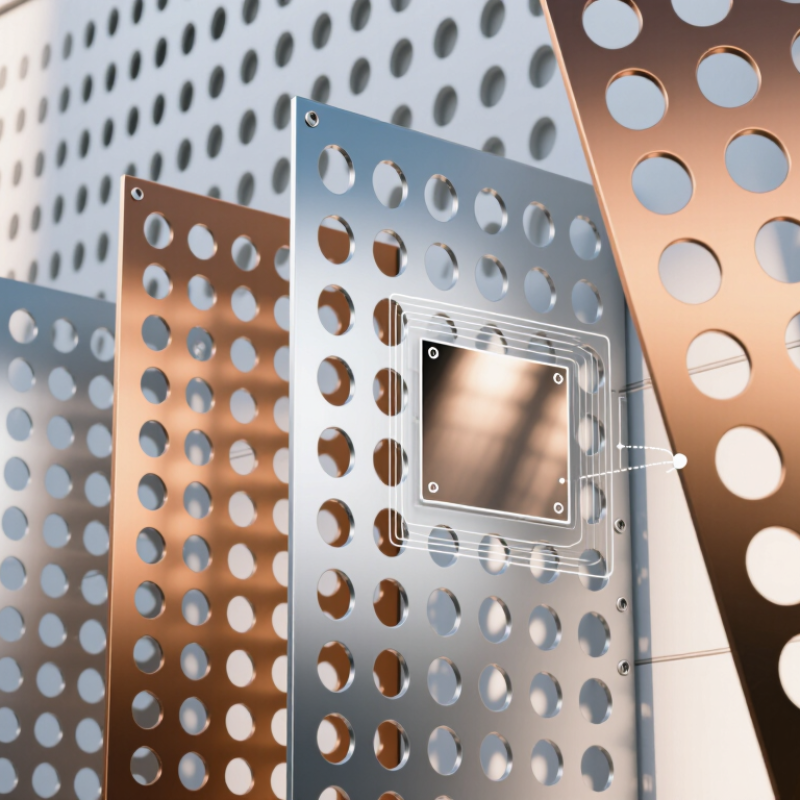
Define Panel Use and Calculate Site-Specific Wind Loads Under ASCE 7
7 Tips for Choosing Perforated Metal Panels
Define Panel Use and Calculate Site-Specific Wind Loads Under ASCE 7
Start by defining what the panel must do. A façade screen, equipment enclosure, and sunshade face different support conditions and pressure paths. Note the panel’s height, width, mounting method, and distance between supports. Small details matter. A perforation percentage alone does not establish a safe wind-load reduction; airflow, panel geometry, and surrounding surfaces also affect pressure.
For a site-specific calculation, use the applicable ASCE 7 edition and confirm the project’s location, risk category, exposure, elevation, and building height. Account for topographic effects where relevant, plus enclosure classification and internal pressure. Then determine the pressures on the panel and its connections, using the appropriate components-and-cladding provisions. Check the metal sheet, stiffeners, fasteners, and supporting structure—not just the panel face. Do not guess. A generic catalog value may miss a corner zone or a long unsupported span. It is easy to overlook a small bracket detail during early selection. Have a qualified design professional verify assumptions against the actual site and drawings, especially when the panel’s open area or mounting differs from tested configurations.
Calculate Open Area: 100 × (Hole Area ÷ Total Sheet Area)
Open area is the percentage of a sheet occupied by holes.
Use this formula: 100 × (total hole area ÷ total sheet area). Keep the units consistent.
For round holes, calculate one hole’s area as π × (diameter ÷ 2)², then multiply by the hole count.
For example, a 6-by-6-inch sample has 36 square inches of sheet area.
Twenty-five holes, each 0.5 inch wide, occupy about 4.91 square inches.
The open area is roughly 13.6 percent. Small details matter.
Use the actual panel dimensions, not just the nominal size on a product listing. Edge margins, trimmed sections, and partial holes can change the result. Check the edges. A drawing may show a regular pattern, while a cut panel may not preserve every opening.
Compare your calculation with the manufacturer’s perforation layout, and clarify whether the stated percentage applies before or after trimming. Also, open area alone does not predict airflow or drainage. Hole shape, spacing, material thickness, and installation conditions affect performance. I would treat the calculation as a useful screening figure, not a guarantee; that distinction is easy to overlook when comparing panels.
Select Sheet Metal to ASTM A240, B209, or A653 Specifications
For perforated panels, specify the base metal before choosing hole size or open area. ASTM A240 covers stainless steel sheet and plate; ASTM B209 covers aluminum and aluminum-alloy sheet and plate; ASTM A653 covers hot-dip zinc-coated or zinc-iron-alloy-coated steel sheet. These standards are not interchangeable. Match the alloy or grade, temper or coating, thickness, and applicable tolerances to the service environment. The standards do not select your perforation pattern. Ask for a material test report and confirm that the supplied sheet meets the specified standard and grade.
The World Stainless Association reported 58.4 million metric tons of stainless steel melt-shop production in 2023, up 4.6% from 2022. USGS’s Mineral Commodity Summaries 2025 estimated 2024 global primary aluminum production at 72 million metric tons. These figures describe industry output, not panel durability. For a real project, check exposure, cleaning chemicals, temperature, and contact with dissimilar metals. Then review how perforating affects the remaining section, edge strength, and flatness. A thin sheet may distort around closely spaced holes. It happens. I would also verify coating requirements after fabrication: cut edges and formed areas may need separate attention. Confirm the current ASTM edition and purchase-order details with the supplier before approving production.
Specify Hole Diameter, Pitch, Pattern, and Sheet Thickness
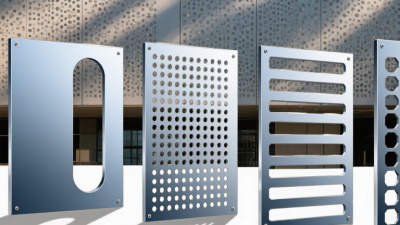
Hole diameter and pitch set open area, airflow, light transmission, and visual density.
For round holes on a 60-degree stagger, open area is approximately
90.7 × (hole diameter ÷ pitch)².
This geometric calculation gives about 22.7% open area for 1.5 mm holes on 3 mm centers. A square layout with the same dimensions gives about 19.6%. Small changes matter. Specify whether pitch is measured center-to-center, and state the pattern clearly on drawings.
Thickness must suit both the panel’s span and the remaining metal between holes.
Larger holes or tighter pitch leave narrower ligaments, which can increase flexing and edge distortion during fabrication. Avoid choosing thickness from appearance alone. Check the supplier’s technical data and the material’s certified mill test report; ASTM A1008/A1008M specifies requirements for cold-rolled carbon-steel sheet, but the selected grade still needs verification. Ask for a sample when finish, stiffness, or sightlines are critical. Measure it in place. One detail is easy to miss: deburring can slightly change the apparent hole edge, so inspect the finished panel, not just the drawing.
Review Support Spans, Finish, and Corrosion-Test Requirements Before Ordering
7 Tips for Choosing Perforated Metal Panels
Check the clear support span, not just the sheet’s overall dimensions. Hole pattern, open area, alloy, and thickness all affect stiffness. Request load data for the exact panel configuration. Then verify wind loads, fasteners, and edge conditions with the project engineer. A panel that feels rigid in your hands may flex between widely spaced rails. Small details matter.
Specify the finish for the actual exposure: sheltered indoor air differs from coastal spray or industrial moisture. Ask for coating type, thickness, surface preparation, and care instructions in writing. Also inspect cut edges and drainage paths, where trapped water can undermine a finish. NACE International’s IMPACT study estimated corrosion costs at US$2.5 trillion worldwide in 2013, about 3.4% of global GDP. That figure covers many industries, not perforated panels alone, but it shows why corrosion planning deserves attention.
Before ordering, state the corrosion-test method, exposure duration, and pass criteria. ASTM B117 describes a controlled salt-spray test; a passing result is not a promise of a specific service life outdoors. It is tempting to treat test hours as years in the field, but that is too neat. Ask whether the tested sample matches your panel’s alloy, finish, and fabrication details. If it does not, request clarification before approving the order.