Inquiry
Form loading...

7 Best Perforated Steel Panels for Buyers

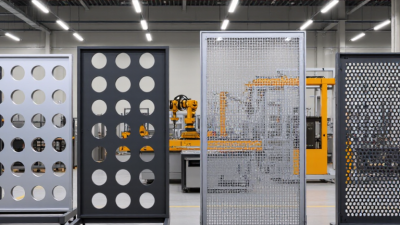
Choosing the right Perforated Steel Panels takes more than comparing hole patterns. A panel that looks suitable online may feel too flexible once installed, or block more airflow than expected. Buyers should compare material thickness, opening size, open-area percentage, finish, and edge treatment against the actual job. Small details matter. A 3 mm opening behaves differently from a 10 mm opening when screening debris, managing ventilation, or controlling visibility.

This guide reviews seven options for common uses, from equipment guards and partitions to architectural screens. It explains what each style can offer and where it may fall short. For example, a heavier sheet can improve rigidity, but it may add weight and require stronger supports. A coated finish can help in exposed settings, yet coating quality and maintenance still deserve a closer look. There is no single best panel for every buyer. That is worth admitting.

Before ordering, check the manufacturer’s drawings, tolerances, available sheet sizes, and sample availability. Confirm that the stated open area matches your airflow or screening needs, and ask how cut edges are treated. If panels will carry loads or face harsh conditions, get project-specific guidance from a qualified supplier or engineer. Product descriptions do not always show how a panel performs after installation. Some choices remain a judgment call. The comparisons ahead can help narrow the field, but measured requirements should lead the final decision.
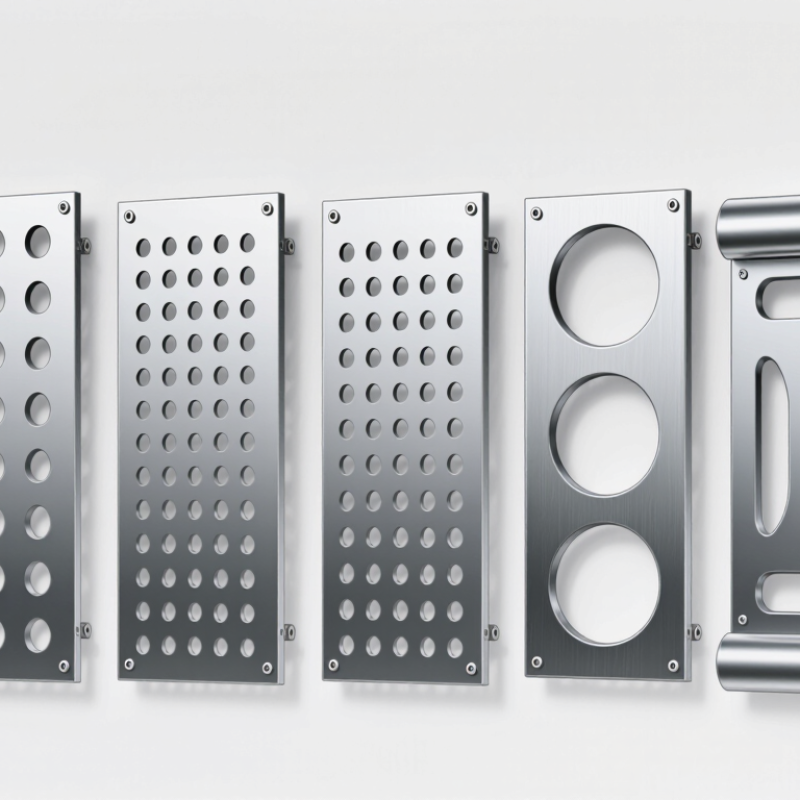
7 Best Perforated Steel Panels for Buyers

Understanding Perforated Steel Panels and Their Main Features

7 Best Perforated Steel Panels for Buyers

Understanding Perforated Steel Panels and Their Main Features

Perforated steel panels are sheets punched with repeated openings. Their performance depends on more than appearance. Hole shape, spacing, sheet thickness, and steel grade all matter. The open-area ratio affects airflow, light, visibility, and weight. Smaller openings can provide more screening, while larger ones allow more air and light through. Details matter. For outdoor use, consider the finish and expected exposure to moisture. A coating may help resist corrosion, but damaged edges and cutouts can still need attention. Panel strength also depends on how it is supported, not just the steel gauge.

Tips: Measure the installation area and check edge clearances before ordering. Compare the open-area ratio, not only the hole diameter. Ask for a sample if the pattern or finish is hard to judge from photos. Small differences show up.

For practical selection, match the panel to its job. A ventilation cover needs suitable airflow and secure fixing points. A partition may call for tighter spacing and a cleaner edge. Check how panels will be cut, fastened, and maintained. I would not assume that a thicker sheet always performs better; it may add weight without solving a support problem. Specifications can also vary by supplier, so verify dimensions and material details on the product sheet.
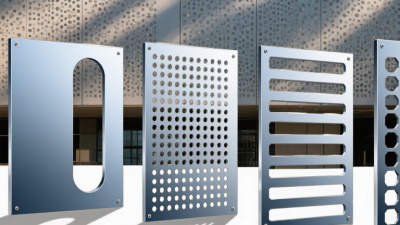
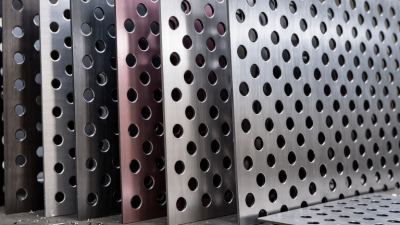
Comparing Materials, Hole Patterns, and Panel Designs

Material choice affects weight, corrosion resistance, and how cleanly a panel can be cut. Carbon steel is often economical for indoor guards and screens, but exposed edges may need protective coating. Stainless steel suits damp or frequently cleaned areas, though its higher cost may not be justified everywhere. Aluminum is lighter and easier to handle, but may flex more in a large, unsupported panel. Check the thickness, finish, and edge treatment together. Details matter.

Hole pattern changes both appearance and performance. Round holes offer a familiar, even look; slotted holes can favor airflow in one direction. Smaller openings may limit visibility, while larger ones reduce the amount of solid material. Open area alone does not tell the whole story: hole spacing and panel thickness also affect stiffness. There is no universally best pattern. A common buying mistake is choosing from a catalog image without checking a sample against the actual light and viewing distance.

Flat sheets are easy to specify, while folded edges, stiffening ribs, or framed panels can reduce movement across wider spans. These forms may add cost and affect installation clearances. Compare finished dimensions, mounting points, and cutout tolerances before ordering. Test a sample. A quick fit check can reveal glare, sharp edges, or a pattern that feels too open for the space.

Seven Perforated Steel Panel Options for Buyers

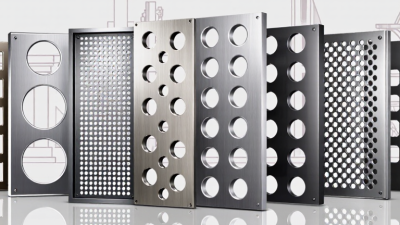
Buyers comparing seven perforated steel panel options should consider hole shape, sheet thickness, and intended load. Round-hole panels suit general screening; slotted panels allow directional airflow. Square and hexagonal patterns create a distinct visual grid. Decorative patterns add detail, while micro-perforated sheets can support acoustic designs with suitable backing. Heavy-gauge panels can offer greater stiffness for demanding applications. No pattern wins everywhere.

The World Steel Association’s World Steel in Figures 2024 reports 1,892.2 million tonnes of crude steel production in 2023. This reflects broad material supply, not panel performance. Compare each supplier’s open-area percentage, hole tolerances, coating details, and load data. For acoustic use, request laboratory results for the complete assembly. Perforation alone does not prove sound absorption.

Tips: Match samples against the actual frame before ordering. Check edge quality and coating coverage, especially around cutouts. Small details matter. A neat drawing can still hide a poor fit.

Matching Panel Types to Common Applications

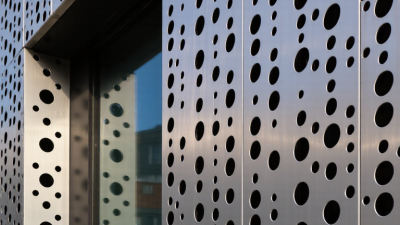
Round-hole perforated panels suit equipment guards, balcony infill, and general screening. Their even pattern gives a clean appearance while allowing airflow. Slotted panels can direct ventilation across machinery enclosures, but their long openings may expose components more easily. For facades, custom patterns add visual interest; check the open area before specifying them, since dense patterns can restrict airflow and daylight. Fit matters.

For noise-control screens, perforated steel usually needs sound-absorbing material behind it; the metal sheet alone is not an acoustic solution. The Federal Highway Administration’s Noise Barrier Design Handbook describes a 5 dB(A) reduction as generally noticeable and 10 dB(A) as substantial. Treat these as system-level benchmarks, not guaranteed panel results. Panel depth, backing, gaps, and installation all affect performance.

Tips: Match hole size and open area to the job. Ask for airflow or acoustic test data for the complete assembly. Small details matter. A pattern that looks right on a drawing may clog with dust or feel too exposed once installed.

7 Best Perforated Steel Panels for Buyers - Matching Panel Types to Common Applications

Panel Type Hole Shape and Layout Common Applications Key Advantages Buyer Considerations
Round-Hole Panel Circular holes, commonly arranged in straight or staggered rows. Machine guards, ventilation covers, equipment enclosures, screens, and general-purpose filtration. Versatile pattern with broad availability; staggered layouts can provide substantial open area for airflow. Compare hole diameter, pitch, sheet thickness, and open area. Smaller holes can improve screening but may restrict airflow.
Square-Hole Panel Square openings arranged in straight or staggered patterns. Screening, sorting, protective covers, shelving, and architectural infill. Provides a regular grid of openings and can be useful when a more defined screening cut is needed. Check the opening size against the material or objects to be screened. Consider edge strength and the panel's support spacing.
Slotted Panel Long, narrow slots, often with rounded ends; slots may run in either direction. Drainage covers, drying equipment, ventilation, grain handling, and screening applications. Elongated openings can support directional flow and allow elongated or flat material to pass through. Specify slot width and length, as well as slot orientation. The orientation can affect flow, screening, and panel stiffness.
Hexagonal-Hole Panel Six-sided openings arranged in a repeating pattern. Ventilation panels, guards, speaker grilles, and decorative screens. Offers a distinctive appearance with distributed openings for air or light passage. Confirm the required open area and visual scale. Pattern geometry and sheet thickness influence rigidity.
Oblong-Hole Panel Elongated openings, typically with rounded ends; proportions vary by design. Air and liquid flow screens, machine guards, and material separation. Useful where an elongated opening is preferred over a round hole, while rounded ends avoid sharp internal corners. Check the opening width and length against the required screening or flow task, and specify the direction of the openings.
Decorative Pattern Panel Custom or repeating geometric patterns, including combinations of hole shapes and sizes. Building facades, privacy screens, partitions, ceiling features, and balustrade infill. Combines light, visibility, and airflow control with a design-led appearance. Review a pattern drawing or sample and confirm structural support, visibility, and local safety requirements before ordering.
Louvered Perforated Panel Perforated openings formed with angled or raised louvers. Ventilation grilles, equipment housings, intake panels, and enclosures requiring some screening from direct view. Louver geometry can help redirect airflow and limit direct sightlines through the panel. Compare airflow needs with the degree of visual screening. Confirm louver direction, installation orientation, and panel finish.

Evaluating Quality, Cost, and Installation Requirements

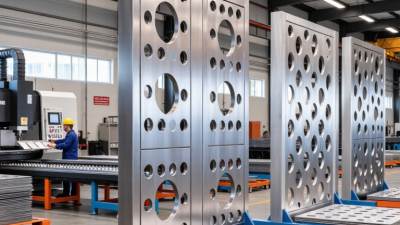
A strong perforated steel panel balances clean punching, consistent thickness, and a pattern suited to its job. Check hole diameter, pitch, open area, and edge burrs; even small differences can affect airflow, screening, and appearance. For wet or coastal sites, compare the steel grade and coating system, not just the finish color. Ask for a material certificate and a sample from the actual production batch. Details matter.

Price depends on more than sheet size. The World Steel Association’s World Steel in Figures 2024 reports global crude-steel production of 1,892.2 million tonnes in 2023. That figure shows the scale of supply, but it cannot predict local panel prices. Request itemized quotes for material, cutting, coating, freight, and fabrication. Compare equivalent thicknesses and tolerances. A cheaper sheet may need extra framing or finishing, erasing its initial saving.

Installation requirements deserve equal attention. Confirm panel weight, support spacing, fastener type, and whether edges need reinforcement before ordering. Slotted or large-open-area panels may feel less rigid than a tighter round-hole pattern; check the supplier’s span guidance. Measure the opening on site, including corner deviations. Measure twice. One caveat: small samples can hide waviness that becomes obvious across a full sheet, so inspect a larger piece when appearance matters.