Inquiry
Form loading...

10 Best Perforated Steel Mesh Manufacturers Worldwide

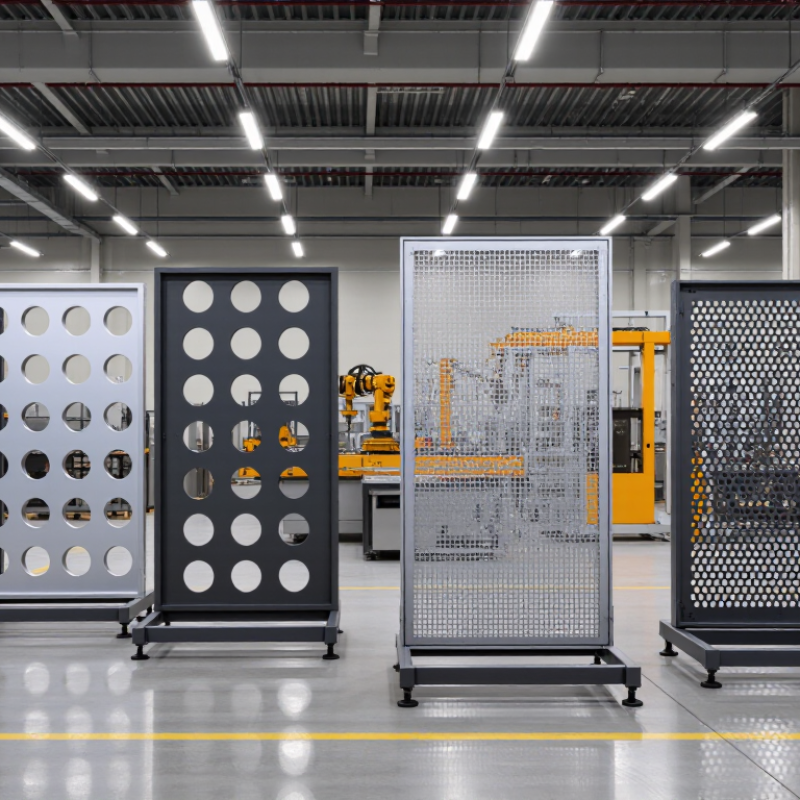
Choosing a Perforated Steel Mesh manufacturer involves more than comparing prices. Hole diameter, sheet thickness, material grade, and open area can affect strength, airflow, drainage, and appearance. A panel with clean, consistent holes feels different from one with rough edges or uneven spacing. Details matter.

This guide introduces 10 manufacturers from around the world and offers a practical starting point for comparing their capabilities. It considers factors buyers can verify, including product range, customization options, quality documentation, production experience, and support with technical specifications. A useful supplier should explain tolerances clearly and help match a pattern to its intended application, whether that means screening, ventilation, architectural cladding, or equipment guarding. Ask for current product data and samples when the finish or fit is critical. Small variations can matter.

The list should not be treated as a universal ranking. Manufacturing strengths, delivery coverage, and project requirements vary, and public information may not show the full picture. That is not everything. Readers should confirm details directly with each company before making a purchasing decision. A careful comparison can narrow the field, but the best choice still depends on the panel, the project, and the people who will install it.
10 Best Perforated Steel Mesh Manufacturers Worldwide

What Perforated Steel Mesh Is and How It Is Made

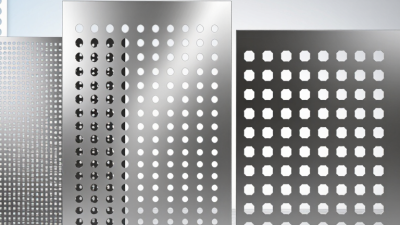
Perforated steel mesh is sheet metal punched with repeated openings; it is not woven wire cloth. Hole shape, spacing, sheet thickness, and open area determine how it handles airflow, screening, light, and load. For example, 3 mm round holes on a 5 mm square pitch provide about 28% open area. That figure is useful, but it does not predict strength by itself. Edges, support spacing, and material grade matter too.

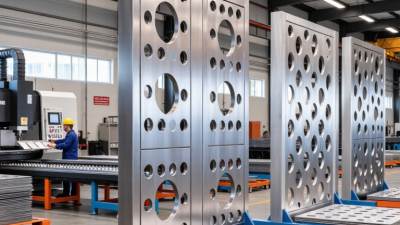
Manufacturing usually starts with steel coil or flat sheet. A press or CNC punching system drives a patterned tool through the metal, then the sheet is leveled and deburred. Larger openings may be cut by laser, though punching is common for repeated patterns. Coating or galvanizing can follow, depending on the environment.

The World Steel Association’s World Steel in Figures 2024 reports 1,888.2 million tonnes of crude steel production in 2023.

That broad figure shows the scale of steel supply, not perforated-sheet output.

A specification should still name the steel grade, thickness, hole size, pitch, and finish. Small burrs can catch gloves or disturb flow. A clean drawing may miss that. It is worth checking a physical sample before approving a large run.
Key Materials, Hole Patterns, and Performance Standards

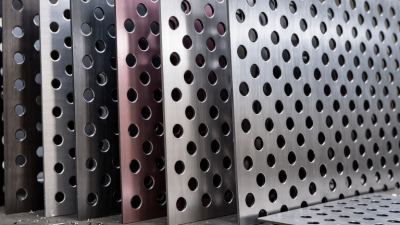
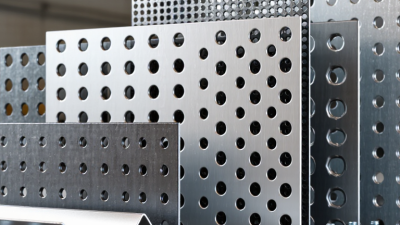
Perforated steel mesh starts with a material choice that fits its environment. Stainless steel can resist corrosion in damp settings, while carbon steel may suit dry, load-bearing applications. Aluminum keeps panels lighter but can dent more easily. Galvanized steel adds a protective zinc coating; cut edges still deserve attention. Small details matter.

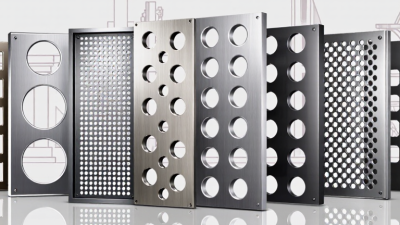
Hole geometry changes how a panel performs. Round holes often provide even airflow and drainage. Square openings can offer a different balance of open area and rigidity. Slotted patterns help guide airflow or screening in a particular direction. Hole size, pitch, sheet thickness, and edge margins all affect strength. A panel with generous open area may feel lighter, but it can flex more under pressure. Not always obvious.

Reliable manufacturers should document material grade, thickness tolerance, hole dimensions, pitch, and flatness. Ask for inspection records or material certificates when consistency matters. Corrosion testing may be useful, but results depend on the test method and service conditions. There is no single standard that guarantees suitability for every installation. Compare drawings and test criteria, not just catalog descriptions. A tidy specification can still miss vibration, cleaning, or sharp-edge concerns; those details are easy to overlook.

10 Best Perforated Steel Mesh Manufacturers Worldwide - Key Materials, Hole Patterns, and Performance Standards

This is an industry-wide technical comparison of common perforated steel product configurations, not a company ranking. Hole sizes, sheet thicknesses, tolerances, and available patterns vary by manufacturer and must be confirmed on the product drawing.

No. Typical Product Configuration Key Material Common Hole Pattern Open-Area Relationship Typical Performance Considerations Relevant Standards and Scope
1 General-purpose perforated sheet Cold-rolled low-carbon steel Round holes on a staggered pitch For an ideal 60° staggered layout: approximately 90.69 × (hole diameter ÷ pitch)² × 100%. Used for screening, guards, and enclosures. Corrosion protection may be needed for exposed or humid service. ASTM A1008/A1008M covers cold-rolled carbon, structural, and high-strength low-alloy steel sheet; it does not specify the perforation pattern.
2 Structural screening panel Hot-rolled carbon structural steel Square holes on a straight pitch For an ideal square-hole, square-pitch layout: (hole width ÷ pitch)² × 100%. Suitable where panel stiffness and load-bearing design matter. Structural capacity depends on the remaining material, supports, and loading. ASTM A36/A36M and EN 10025 are structural-steel references; they are separate standards and are not automatically interchangeable.
3 Corrosion-protected utility panel Hot-dip galvanized steel sheet Round holes, staggered or straight pitch Depends on hole diameter and pitch; the opening layout should be specified on the drawing. Provides a zinc coating for corrosion protection. Cutting or punching after coating can expose uncoated edges. ASTM A653/A653M covers zinc-coated and zinc-iron-alloy-coated steel sheet; coating class and substrate requirements should be specified.
4 Washable process or food-area screen Type 304 stainless steel Round holes on a staggered pitch For an ideal 60° staggered layout: approximately 90.69 × (hole diameter ÷ pitch)² × 100%. Offers general-purpose corrosion resistance in many indoor environments. Suitability depends on the chemicals, temperature, and cleaning conditions. ASTM A240/A240M covers chromium and chromium-nickel stainless steel plate, sheet, and strip; it does not certify a finished perforated panel.
5 Marine or chloride-exposed screen Type 316L stainless steel Slotted holes, commonly arranged in rows Varies with slot width, slot length, orientation, and spacing. Molybdenum-bearing 316L is commonly selected for improved resistance to chloride-related corrosion compared with 304; performance still depends on exposure and maintenance. ASTM A240/A240M includes stainless steel plate, sheet, and strip. Material grade alone does not define service-life performance.
6 Decorative or indoor architectural panel Type 430 ferritic stainless steel Round, square, or decorative punched holes Depends on the selected hole geometry and pitch. Often used for indoor decorative applications. Corrosion resistance differs from austenitic grades and should be matched to the environment. ASTM A240/A240M provides material requirements for stainless plate, sheet, and strip; verify the specified grade and finish.
7 Ventilation or acoustic screen Low-carbon steel or stainless steel, selected for the environment Small round holes in a staggered layout For round holes, the percentage depends on hole diameter and pitch; acoustic performance also depends on the backing cavity and absorber. Open area affects airflow and pressure drop. Perforation alone does not establish an acoustic rating. Use the applicable base-material standard, such as ASTM A1008/A1008M or ASTM A240/A240M; specify any acoustic test method and assembly separately.
8 Fine filtration or separation panel Stainless steel sheet, commonly a corrosion-resistant grade selected for the process Small round holes or narrow slots Must be calculated from the actual aperture dimensions and spacing; edge condition and thickness affect usable passage. Specify aperture size, tolerance, burr direction, and inspection method. A perforated sheet is not equivalent to woven wire cloth or a rated filter cartridge. ASTM A240/A240M may apply to the stainless base material. Product aperture tolerances should be agreed in the purchase specification.
9 Heavy-duty machine guard or impact screen Carbon steel plate or stainless steel plate, depending on service Larger round or square holes with a specified bridge between openings Calculated from the opening area divided by the repeating pattern area; the remaining ligament affects strength. Check panel thickness, unsupported span, fixing method, impact risk, and edge finish. Open-area percentage alone does not determine guard strength. ASTM A36/A36M may be specified for structural carbon steel, or ASTM A240/A240M for stainless plate; design and safety requirements are separate.
10 Custom mixed-pattern or formed panel Carbon steel, galvanized steel, or stainless steel selected for the operating environment Combined round holes, slots, or patterned zones Calculate each zone separately, then assess the overall open area against the complete panel area. Forming, bending, coating sequence, and edge trimming can affect dimensions and finish. Confirm the finished-part drawing and inspection criteria. Apply the appropriate base-material specification, such as ASTM A653/A653M for galvanized sheet or ASTM A240/A240M for stainless sheet; no single standard defines every custom perforation.

Standards listed refer to base-material requirements unless stated otherwise. They do not, by themselves, establish perforation tolerances, open-area accuracy, load capacity, corrosion life, or finished-product certification. Confirm the required grade, dimensions, coating or finish, inspection, and test criteria in the purchase specification.

Common Industrial and Architectural Applications

Perforated steel mesh serves practical roles in factories, public buildings, and outdoor structures. On production lines, panels protect moving equipment while allowing airflow and visibility. Workers can inspect machinery through the openings without removing a guard. Hole size and sheet thickness matter: openings that are too large may compromise protection, while very small ones can collect dust.

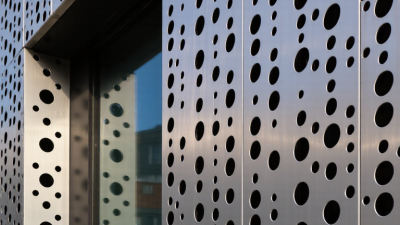
Architects use perforated panels for sun screens, balcony infill, ceiling features, and building façades. A façade with carefully spaced holes can soften direct sunlight and create changing patterns indoors. Stainless steel often suits damp or coastal settings, while coated carbon steel may work for less demanding locations. The right choice depends on exposure, maintenance access, and the panel’s support structure.

Details matter here. A panel that looks light can still add substantial weight across a large façade. In parking structures, mesh can provide ventilation and reduce visual bulk, but edge finishing and secure fixing need close attention. I would not assume that one opening pattern performs equally well in every climate or application. Dust, rain, and glare can change its practical effect. Samples help, though they do not replace checking the final installation conditions.

How to Evaluate Perforated Steel Mesh Manufacturers

Evaluating perforated steel mesh manufacturers starts with the part’s actual job. Ask how they control hole diameter, pitch, sheet thickness, open area, and flatness. These details affect airflow, drainage, strength, and fit. Provide a clear drawing and specify acceptable tolerances. Then compare the supplier’s quotation against those requirements, not just its unit price.

Request material documentation and a sample made with the proposed process. Check hole edges for burrs, spacing for consistency, and the sheet for warping under good light. Ask how inspections are recorded and what happens when a batch misses specification. A polished sample is useful, but it cannot prove every production run will match. That matters. Delivery estimates, packaging, and technical replies also reveal how reliably a manufacturer handles practical details.

Tips: Send the same drawing and questions to each candidate. Ask for a recent inspection report and a sample from normal production. Confirm whether cutting, finishing, and packing are included. A common mistake is choosing the lowest quote before checking tolerances; even a careful checklist can miss a requirement, so have the end user review it.

Profiles of 10 Leading Manufacturers Worldwide

These ten manufacturer profiles show how perforated steel mesh production varies across regions. A Chinese producer may focus on high-volume sheets, with consistent hole patterns and quick custom runs. An Indian manufacturer may offer varied gauges for screens, guards, and architectural panels. A German specialist may emphasize tight tolerances and documented inspection. Details matter.

An Italian maker may pair precision punching with decorative finishes for building projects. A Turkish producer may serve construction and industrial buyers with standard sheet sizes. In the United States, a manufacturer might prioritize heavy-duty panels and application support. A Japanese producer may focus on repeatable dimensions and clean edges. A South Korean supplier may combine automated processing with flexible order sizes.

A British manufacturer may provide tailored mesh for filtration or equipment enclosures. An Australian producer may favor durable products suited to outdoor installations. These are useful profile differences, not guarantees; capabilities vary by facility and order. Ask for sample panels, material certificates, and clear tolerances before comparing quotes. Look closely at burrs around each opening. They can affect handling and fit. A polished catalogue is not proof of consistent production, and I would want recent inspection records. Even a small mismatch in open area can change airflow or screening performance.