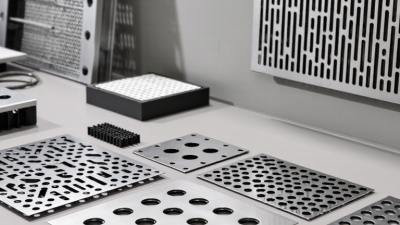
7 Tips for Choosing Perforated Plate Steel
Choosing Perforated Plate Steel is not just a matter of picking a hole pattern from a catalog. The right sheet must suit its purpose, environment, and installation method. A panel used for ventilation may need more open area, while a walkway or machine guard may call for different strength and edge details. Small choices matter.
Start with the job. Consider the material grade, thickness, hole shape, hole size, and spacing. These details affect weight, airflow, drainage, appearance, and load capacity. Check whether the plate will face moisture, chemicals, heat, or frequent cleaning. A finish that works indoors may not last outdoors. Measure carefully, too. A few millimeters can complicate fitting around frames, fasteners, or existing equipment.
This guide presents seven practical tips for comparing options and asking suppliers useful questions. Look for clear specifications, product data, and samples when the application warrants them. Confirm tolerances and edge conditions before ordering; they are easy to overlook. Do not assume that two plates with the same thickness will perform alike. They may not. The best choice depends on real operating conditions, not just a low quoted price or a familiar pattern. Some project details may remain uncertain until the plate is installed and tested, so allow room to review assumptions. A careful selection can support dependable performance and reduce avoidable rework.
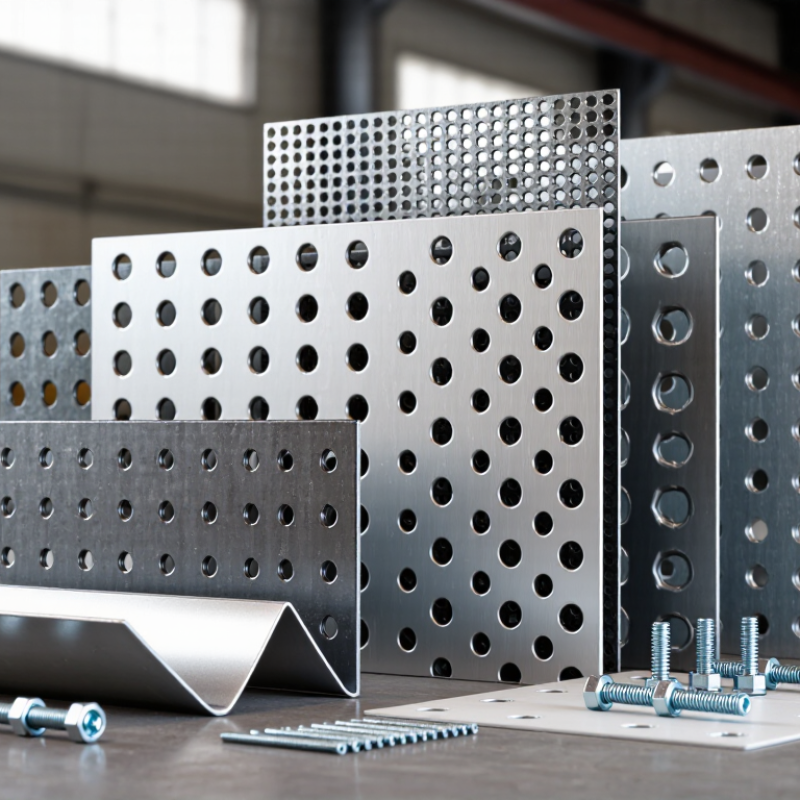
Define the Application and Operating Conditions
Perforated plate steel performs differently in a machine guard, walkway, filter, or acoustic panel. Define the job before choosing thickness or hole pattern. Record the span, support spacing, expected load, impact risk, and required open area. A 40% open pattern may improve airflow, but it can reduce stiffness and allow smaller objects to pass through. Check the actual clearance, not only the catalog drawing.
Operating conditions deserve equal attention. Note humidity, salt spray, cleaning chemicals, dust, temperature cycles, and electrical contact. ISO 9223 classifies atmospheric corrosion from C1 to CX, helping engineers compare exposure severity. The NACE IMPACT study estimated global corrosion costs at US$2.5 trillion annually, or about 3.4% of global GDP. It also found that 15–35% of corrosion costs could be reduced through suitable control practices. Material selection is not a minor detail.
Consider carbon steel, galvanized steel, or stainless steel only after reviewing the environment. Coatings may fail at cut edges, drilled holes, and damaged corners. High heat can also change strength and distort thin sheets. A neat calculation can still mislead. Real sites contain vibration, trapped water, and uneven supports. Leave room for inspection, drainage, and replacement. If operators will stand on the plate, verify load capacity through a qualified structural review rather than relying on visual thickness alone.
Compare Steel Grades and Corrosion Resistance
Choosing perforated plate steel starts with the environment, not the hole pattern. Carbon steel is often economical and strong, but scratches or cut edges can rust when exposed to moisture. Galvanized steel adds a zinc coating that helps protect those areas, though cutting and forming may leave vulnerable spots. Stainless steel resists corrosion better in many settings. Grade 304 suits many indoor and mild outdoor uses; grade 316 is often preferred near salt spray or chloride exposure. No grade is rust-proof in every condition. Check the actual exposure, including cleaning chemicals and standing water.
Tips: Compare grades using the same conditions. Ask for material certificates, coating details, and corrosion data when available. Inspect cut edges, welds, and bends, not just the flat surface. A small sample left outdoors can be informative, though it cannot replace proper testing.
For a damp workshop, galvanized plate may be a practical choice if its coating remains intact. Near a coastline, stainless 316 may justify its higher initial cost, especially where frequent replacement would be difficult. Still, alloy selection alone cannot solve poor drainage. Water trapped in narrow perforations can leave orange marks, even on a resistant surface. I have seen specifications focus heavily on grade and overlook cleaning access; that is easy to regret. Match the steel to the exposure, expected maintenance, and forming process, then confirm that the finished part—not merely the raw sheet—meets the need.
7 Tips for Choosing Perforated Plate Steel - Compare Steel Grades and Corrosion Resistance
| Tip |
Selection Factor |
Steel Grade or Finish |
Corrosion Resistance |
Practical Guidance |
| 1 |
Identify the environment |
Choose by exposure conditions |
Resistance depends on moisture, salts, chemicals, temperature, and exposure time. |
Specify whether the plate will be used indoors, outdoors, near the coast, or in a chemical-processing area before comparing grades. |
| 2 |
Compare common stainless grades |
304 / 316 stainless steel |
Both offer good general corrosion resistance. Grade 316 contains molybdenum and generally performs better than 304 in chloride-bearing environments. |
Consider 304 for many indoor and general-purpose uses; consider 316 for marine or chloride exposure. Neither grade is immune to corrosion in every condition. |
| 3 |
Check whether a ferritic grade is suitable |
430 stainless steel |
Typically offers less corrosion resistance than 304 and 316, especially in damp or chloride-rich environments. |
Use only where the environment and appearance requirements are compatible with its more limited corrosion performance. |
| 4 |
Evaluate carbon steel and coatings |
Carbon steel; painted or galvanized |
Uncoated carbon steel rusts when exposed to moisture and oxygen. Zinc galvanizing provides sacrificial protection; paint acts as a barrier while intact. |
For galvanized plate, confirm whether the coating is applied after perforation. Perforating pre-coated sheet can expose unprotected edges around the holes. |
| 5 |
Account for holes and cut edges |
Any grade or finish |
Perforations increase exposed edge area. Damage to a coating or unsuitable grade can allow localized corrosion to start at hole edges. |
Ask how the plate will be perforated, deburred, finished, and protected. For coated steel, include hole edges and cut edges in the corrosion-protection plan. |
| 6 |
Match open area to strength requirements |
Material thickness and hole pattern |
Corrosion resistance is a material and finish property; it does not by itself determine the plate’s load capacity. |
Compare thickness, hole diameter, pitch, and open area. More open area removes more material, so verify structural performance for the intended load and support spacing. |
| 7 |
Plan for maintenance and service life |
Grade, finish, and cleaning method |
Deposits and trapped moisture can contribute to corrosion, including pitting or crevice corrosion in susceptible stainless-steel conditions. |
Choose a surface that can be inspected and cleaned in service. For stainless steel, suitable cleaning and passivation practices can help maintain corrosion resistance. |
Choose Hole Shape, Size, and Open Area
Choosing perforated plate steel starts with the opening, not the finish. In workshop testing, hole shape can affect airflow, drainage, stiffness, and appearance. Round holes distribute stress fairly evenly and are easy to specify. Square holes provide a larger clear passage, but their corners need closer inspection. Slotted holes guide movement in one direction and suit ventilation or screening tasks. I once focused too much on appearance. That was a mistake.
Hole size should match the material passing through the plate. A 3 mm opening may stop small debris, while a 12 mm opening allows faster airflow but reduces protection. Measure the actual particles, liquid flow, or ventilation demand before selecting a pattern. Thickness matters too. Thin steel around large openings can flex under hand pressure. For walkways or covers, check load, edge support, and possible clogging. Small details matter.
Open area is the percentage of the sheet removed by holes. Higher open area usually improves airflow and lowers weight, yet it can reduce strength, privacy, and impact resistance. Compare open area with the hole arrangement, not by itself. Two plates can show 40 percent open area but perform differently because of spacing and pitch. Ask for a drawing, tolerance range, and material data before ordering. Calculations help, but field conditions remain untidy. Dust, paint buildup, and cutting variation can change performance. Leave a practical margin, even when the spreadsheet looks convincing.
Choosing Perforated Plate Steel: Hole Size and Open Area
The chart compares theoretical open area for round holes in square and staggered layouts at different hole-to-pitch ratios. A higher ratio means larger holes relative to the spacing between hole centers.
Values are calculated for ideal, repeating patterns: square layout = π/4 × (hole diameter ÷ pitch)²; staggered layout = π/(2√3) × (hole diameter ÷ pitch)². Actual usable open area can differ due to sheet edges, tolerances, and manufacturing constraints.
Evaluate Plate Thickness, Strength, and Weight
When comparing perforated plate steel, check thickness, grade, hole pattern, and load direction together. A thicker plate usually resists bending better, but it also adds weight and may be harder to handle. The American Institute of Steel Construction lists structural steel density at about 490 pounds per cubic foot, or 7,850 kilograms per cubic meter. Use that figure for a first-pass estimate, not a final shipment weight. Perforations reduce mass, but the remaining steel must still carry the load.
Strength figures need context. ASTM A36 specifies a minimum yield strength of 36 ksi, while ASTM A572 Grade 50 specifies 50 ksi. These are minimums for solid material, not guarantees of a perforated panel’s capacity. Hole size, spacing, edge distance, and support conditions all affect performance. A narrow strip between holes can deform before the surrounding plate does. That detail is easy to overlook.
Ask for mill certificates and a supplier’s load data for the actual thickness and perforation pattern. For a rough weight check, calculate the solid-sheet weight, then adjust for the stated open area; verify the method with the fabricator. Open area alone does not establish strength. If a panel will span between supports, compare deflection as well as yield strength. I have seen thickness chosen by weight alone. That shortcut can be costly.
Check Fabrication Quality, Standards, and Supplier Support
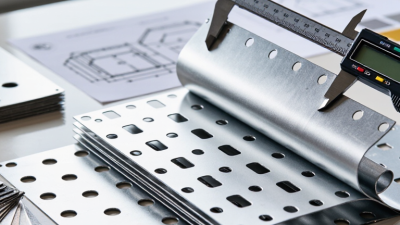
Fabrication quality is easiest to judge at the edges. Look for clean, consistent cuts and flat sheets without burrs that could complicate handling or installation. Check that hole size and spacing match the drawing, including near the perimeter, where deviations can be easy to miss. A quick tape measure check helps. So does a careful visual inspection.
Ask the supplier for the steel grade, thickness tolerance, and applicable material test documents. Confirm that the stated standard matches your project requirements, rather than relying on a vague “industry standard” claim. I’ve found it useful to request a sample or a recent inspection record before ordering a large batch. Records matter. Still, paperwork alone won’t reveal every issue.
Supplier support can affect the finished result. Discuss how the plate will be cut, formed, coated, or packed, and share the intended use and operating conditions. A knowledgeable supplier should explain trade-offs, flag unclear specifications, and give realistic lead times. Ask how damaged sheets or dimensional discrepancies are handled. Sometimes I’ve focused too much on price and overlooked packaging; that was a mistake worth reconsidering. Check that the delivery method protects exposed edges and keeps plates from shifting in transit.