Inquiry
Form loading...

How to Choose Perforated Aluminum Sheet in 2026?

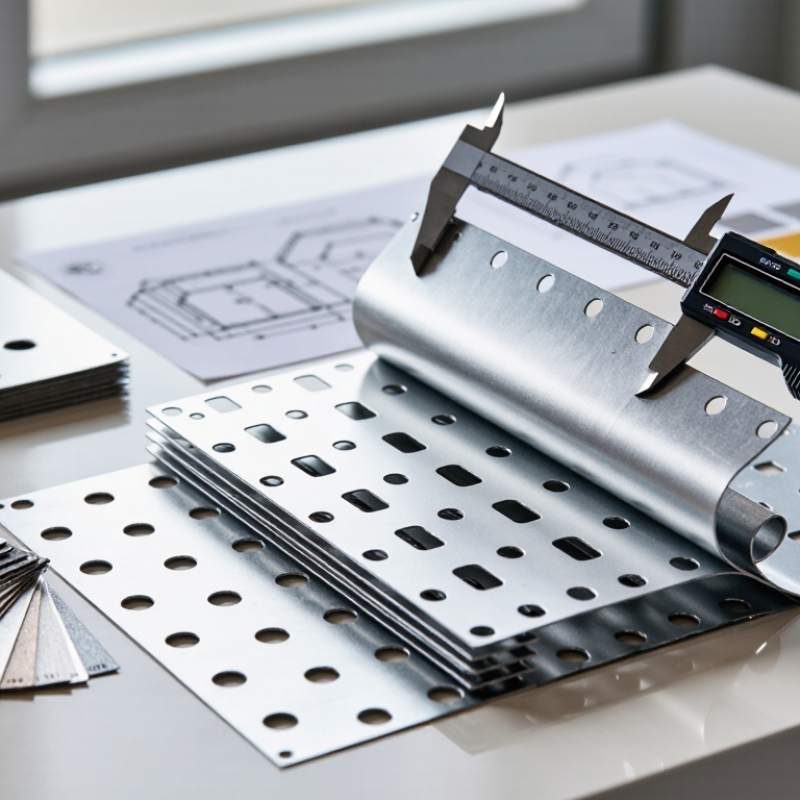
Choosing the right Perforated Aluminum Sheet in 2026 requires more than comparing hole patterns and prices. Material grade, thickness, open area, coating, and load performance can change the final result significantly. A sheet that looks ideal under showroom lighting may deform around a fastener or rattle in strong wind. Small details matter.

Industry forecasts support a careful approach. The International Aluminium Institute reports that global aluminium demand could increase by roughly 80% by 2050, driven by transport, construction, renewable energy, and circular-economy applications. Its research also emphasizes recycling and lower-carbon production. The Aluminum Association has similarly documented aluminium’s expanding role in building systems, where durability and recyclability influence material decisions. These trends make sourcing more important in 2026, not less.

Start with the application. A sun-screen façade may need high airflow and controlled glare, while a machine guard may require smaller openings and better impact resistance. Compare 3003, 5052, and 6061 alloys with qualified suppliers, because strength and forming behavior differ. Check hole diameter, pitch, pattern direction, tolerance, edge distance, and flatness. Do not trust a catalogue image alone.

One practical warning remains. “Lightweight” does not always mean economical. A thinner panel may demand extra framing, more supports, or earlier replacement. I have seen specifications focus on open area while ignoring drainage, cleaning access, and galvanic contact with adjacent metals. That shortcut can become expensive.

This guide uses manufacturer data, engineering practice, and recognized industry reports to explain how to select Perforated Aluminum Sheet with clearer evidence. Some recommendations still need project-specific verification. That is the honest part. Conditions vary. Testing matters.

How to Choose Perforated Aluminum Sheet in 2026?

Define Your Project’s Performance and Design Requirements

How to Choose Perforated Aluminum Sheet in 2026?

Define Your Project’s Performance and Design Requirements

Begin with the environment, not the pattern. Indoor ceiling panels need different performance from coastal façade screens. Specify humidity, salt exposure, wind pressure, impact risk, and cleaning chemicals. Aluminum may resist corrosion well, but thin sheets can still dent or distort.

Your design should include measurable targets. Calculate open area, light transmission, airflow, weight, and expected deflection. A 40% open area can improve ventilation, yet it may reduce privacy and shading. Hole diameter, pitch, and sheet thickness change the result. Small errors here become visible across a large elevation. They also affect fabrication costs.

Use recognized standards during selection. ASTM B209 helps define aluminum sheet requirements, while ASTM E330 supports pressure testing for exterior assemblies. For sustainability decisions, review the International Aluminium Institute’s 2024 reporting. It identifies aluminum production as responsible for roughly 2% of global greenhouse-gas emissions, making recycled content and manufacturing energy important variables. Recycling can reduce impact, but declarations should be verified through an environmental product declaration.

Ask for test evidence, not attractive samples alone. Request alloy, temper, thickness tolerance, coating data, open-area calculations, and structural results. I have seen projects choose a beautiful pattern, then discover excessive glare or weak edges. That mistake is avoidable. Still, laboratory performance may not match every site condition. A small full-scale mock-up is often worth the extra week.

Choose the Right Aluminum Alloy, Thickness, and Sheet Size

Perforated aluminum sheet starts with the alloy, not the hole pattern. For outdoor screens, 5052-H32 is often a sensible choice. Its magnesium content supports corrosion resistance and moderate forming. 6061-T6 provides higher strength, but tight holes and bends deserve caution. The International Aluminium Institute recorded roughly 72.8 million tonnes of primary aluminum production in 2024. That figure indicates a mature supply base, not automatic grade suitability. I would still request the mill certificate.

Thickness should follow span, load, open area, and support spacing. A 2 mm sheet with 40% open area can feel much less rigid than a solid panel. ASTM B209 defines requirements for aluminum sheet and plate, but it does not select your gauge. In practical fabrication, 1.5–3.0 mm suits many light architectural panels. Heavier guards may need thicker material or folded edges. Do not guess. Ask for yield strength, tensile strength, elongation, and flatness data.

Sheet size must fit the perforating press, delivery route, and frame. Standard stock often sits near 1,220 × 2,440 mm, but alloy and thickness change availability. Confirm the unperforated border. It affects fastening and visual alignment. Specify hole diameter, pitch, pattern, tolerance, grain direction, and coating requirement. The USGS Mineral Commodity Summaries 2025 estimates 2024 global primary aluminum output near 72 million tonnes, yet regional supply can delay unusual sizes. A full-scale drawing review may expose a poor choice. That is worth admitting. Do not trust a catalog number alone.

Compare Perforation Patterns, Open Area, and Structural Strength

How to Choose Perforated Aluminum Sheet in 2026?

Perforation pattern controls airflow, light, noise, and remaining metal. Round holes usually distribute stress more evenly than sharp rectangular openings. Square holes can provide higher open area, but their corners may concentrate stress. Slotted holes suit ventilation and drainage, although long slots reduce cross-direction stiffness. For a 60-degree staggered round pattern, open area is about 90.7(d/p)² percent, where d is hole diameter and p is pitch. A 50% open area may look efficient, yet it can feel flexible without ribs or a supporting frame.

The Aluminum Association’s 2024 Aluminum Statistical Review reports transportation as roughly 36% of U.S. aluminum demand. Weight matters in moving equipment. The U.S. Geological Survey’s 2025 Mineral Commodity Summaries also notes that recycled aluminum uses only about 5% of the energy required for primary production. Still, material efficiency cannot replace structural checks. Compare yield strength, sheet thickness, ligament width, edge distance, and fastener locations. ASTM E8/E8M tensile testing helps verify material properties, while project calculations should follow the applicable aluminum design standard.

Tips: Request a sample panel. Measure deflection, airflow, and noise under realistic loads. Keep solid borders around cutouts. I would not choose the highest open area automatically. Real installations often reveal vibration problems that drawings miss. A stronger alloy may help, but forming can reduce performance. This detail deserves review.

Evaluate Finishes, Corrosion Resistance, and Environmental Conditions

How to Choose Perforated Aluminum Sheet in 2026?

Selecting perforated aluminum sheet starts with the environment, not appearance. Marine air carries chlorides that attack exposed edges and fasteners. Industrial zones may add sulfur compounds and acidic moisture. ISO 9223 classifies atmospheric corrosivity from C1 to CX, helping engineers match protection levels with real exposure. The NACE IMPACT study estimated global corrosion costs at 3.4% of worldwide GDP. That figure makes a cheap finish less attractive.

Anodizing creates a hard, integrated oxide layer and suits moderate outdoor exposure. Powder coating offers broader color choices, but damaged areas can expose the substrate. High-performance architectural coatings may perform better under intense sunlight and humidity. Always inspect the perforation edges, because punching can leave sharp, unprotected surfaces. Specify compatible fasteners and drainage gaps. Trapped water is a quiet failure point.

Tips: Request coating thickness, adhesion, and salt-spray data. ASTM B117 results help compare samples, but they do not predict every outdoor condition. Ask for ISO 9227 testing and project-specific exposure evidence. The International Aluminium Institute reports that recycling aluminum uses about 5% of the energy required for primary production. Recycled content can reduce impact, but coating removal and alloy sorting still matter. I would not select a finish from a color chart alone. Field conditions often prove more demanding.

Verify Suppliers, Standards, Fabrication Quality, and Total Cost

How to Choose Perforated Aluminum Sheet in 2026?

Supplier verification should begin with traceability, not a polished website. Request mill certificates, alloy and temper details, thickness tolerances, and batch identification. Ask for recent test reports covering tensile strength, coating adhesion, and dimensional accuracy. ISO 9001 certification supports process control, but it does not guarantee every sheet is consistent. Request samples from the same production route. Inspect them yourself.

Standards matter during specification. ASTM B209 and EN 485 provide useful references for aluminum sheet requirements. Define hole diameter, pitch, open area, edge margins, flatness, and burr limits in writing. A small burr can damage gloves or complicate assembly. Production records should confirm punching direction, tool wear, and inspection frequency. Do not guess. Fabrication quality often changes after cutting, bending, or forming. I have seen attractive samples fail when the actual batch showed warped edges and uneven openings. That deserves honest attention.

Total cost includes more than the quoted sheet price. Add freight, protective packaging, scrap, tooling, secondary finishing, inspection, and installation labor. The International Aluminium Institute reports that recycling aluminum uses about 95% less energy than producing primary aluminum, so recycled content may reduce environmental impact. However, verify the claim through a chain-of-custody document. The World Bank Commodity Markets Outlook shows that metal prices can remain volatile, making fixed assumptions risky. Compare suppliers using the same specification and delivery terms. A cheaper sheet may become expensive after rework. My earlier cost comparisons were too narrow. A stronger review includes performance, waste, maintenance, and replacement risk.

How to Choose Perforated Aluminum Sheet in 2026? - Verify Suppliers, Standards, Fabrication Quality, and Total Cost
Decision Area Data Dimension Recommended Requirement or Benchmark What to Verify Before Purchase Commercial or Technical Impact Assessment
Supplier Verification Material traceability Each production lot should have a heat number, material certificate, alloy designation, temper, thickness, and quantity. Match the certificate details with the packing list, product markings, and purchase order. Reduces the risk of receiving an incorrect alloy, temper, or thickness and supports future claims. Required
Supplier Verification Quality management system A documented quality system, preferably certified to ISO 9001 or an equivalent recognized system. Check the certificate scope, validity period, issuing body, and whether it covers manufacturing or fabrication activities. Improves process consistency but does not replace product-specific inspection. Verify
Supplier Verification Production capability The supplier should demonstrate capability for the specified alloy, sheet thickness, hole pattern, open area, cut size, and edge treatment. Request representative samples, machine capability information, and dimensional inspection records. Prevents late changes, excessive scrap, and unsuitable tooling charges. Required
Supplier Verification Sample approval process Approve a first article or production sample before releasing the full batch. Confirm hole diameter, pitch, pattern orientation, flatness, burr condition, and cut dimensions. Small sample costs can prevent a large nonconforming shipment. Recommended
Material Standard Aluminum sheet specification Specify the alloy and temper together with a recognized sheet-product standard, such as ASTM B209/B209M or EN 485, where applicable. Ensure the certificate identifies the exact alloy, temper, thickness tolerance, and applicable revision. Material selection affects strength, formability, corrosion resistance, availability, and price. Required
Material Standard Common alloy selection Use a formable alloy for complex bending; use a higher-strength alloy when structural performance is more important than maximum formability. Confirm that the selected temper is suitable for punching, flattening, bending, welding, or coating. A stronger temper may increase cracking risk and fabrication cost. Application Specific
Material Standard Mechanical properties Define minimum tensile strength, yield strength, and elongation according to the selected alloy and temper standard. Review the test method and results on the material certificate; ASTM E8/E8M is a commonly used tensile-testing reference. Confirms that the sheet is suitable for load, vibration, forming, or enclosure requirements. Required for Structural Use
Perforation Design Hole diameter and pitch Define hole diameter, center-to-center pitch, pattern type, and whether the pattern is round, square, slotted, or custom. Use a controlled drawing with tolerances rather than a text-only description. These values determine airflow, light transmission, weight, stiffness, appearance, and tooling requirements. Required
Perforation Design Open area For a 60-degree staggered round-hole pattern, open area can be estimated as:
Open Area (%) = 90.69 × (d ÷ C)2
where d is hole diameter and C is pitch in the same unit.
Verify the calculated open area against the approved drawing and actual inspection results. Higher open area improves airflow but generally reduces stiffness and increases edge distortion risk. Calculate
Perforation Design Minimum border and edge margin Specify the solid border width around the perforated field and the minimum distance from holes to cut edges. Confirm that the border is sufficient for handling, fastening, trimming, and frame support. Insufficient edge margin can cause tearing, deformation, and difficult installation. Critical
Fabrication Quality Thickness and dimensional tolerance Set tolerances for sheet thickness, length, width, hole diameter, pitch, and squareness according to the governing product specification or approved drawing. Request a dimensional inspection report using calibrated measuring equipment. Tight tolerances may increase setup time, inspection effort, and total cost. Required
Fabrication Quality Burrs and sharp edges Edges should be free from hazardous burrs; specify deburring, brushing, tumbling, or edge conditioning when required. Inspect both sides of the sheet and verify that deburring has not excessively rounded or distorted the holes. Important for worker safety, downstream assembly, gasket sealing, and coating quality. Critical
Fabrication Quality Flatness and distortion Define a measurable flatness limit and inspection method, especially for high-open-area patterns or thin sheet. Check the sheet on a verified flat reference surface or according to the agreed inspection procedure. Warping can create installation gaps, vibration, visible defects, and additional leveling work. Required
Fabrication Quality Cut edges and corners Specify saw-cut, shear-cut, laser-cut, waterjet-cut, or punched edges, along with corner radius and edge condition. Confirm that the cutting process does not cause excessive melting, cracking, rollover, distortion, or contamination. Cutting method affects speed, appearance, tolerances, and post-processing cost. Verify
Surface and Finish Surface condition Define acceptable limits for scratches, dents, stains, oil residue, discoloration, and handling marks. Use approved visual samples and identify which surfaces are exposed or concealed. Cosmetic requirements can materially increase sorting, protection, and packaging costs. Specify Clearly
Surface and Finish Coating or anodizing Specify the finish type, color, coating thickness or class, adhesion requirements, and test method where applicable. Request coating-process records and sample panels; confirm compatibility with the aluminum alloy and perforation geometry. Finishing may improve appearance and durability but can reduce available open area if buildup is significant. Application Specific
Inspection and Documentation Inspection plan Use a documented inspection plan covering material identity, dimensions, perforation geometry, flatness, burrs, surface condition, and packaging. Agree on sampling level, acceptance criteria, inspection equipment, and nonconformance procedure before production. Clear acceptance rules reduce disputes and prevent inconsistent quality decisions. Recommended
Inspection and Documentation Certificate package Request the material certificate, dimensional report, surface or coating report when applicable, packing list, and final inspection record. Confirm that documents refer to the correct purchase order, lot, drawing revision, and shipment quantity. Complete records support traceability, audits, maintenance, and regulatory documentation. Required
Total Cost Base material cost Calculate the net aluminum mass from thickness, sheet area, density, and perforation open area. Aluminum density is commonly approximated as 2.70 g/cm³ for estimating. Use the quoted alloy, temper, thickness, sheet size, and actual perforated weight rather than comparing only price per sheet. Alloy, temper, thickness, market movement, and order quantity strongly affect the material portion of cost. Calculate
Total Cost Tooling and setup Include punch tooling, programming, setup, trial pieces, pattern changes, and minimum-order charges. Ask whether tooling is reusable, transferable, maintained by the supplier, or included in the unit price. For small or custom orders, setup and tooling can exceed the apparent material-price difference. Include in Quote
Total Cost Secondary operations Price deburring, leveling, trimming, bending, welding, coating, anodizing, protective film, and special packaging separately. Request line-item pricing and identify which operations are mandatory versus optional. Low unit prices may exclude operations necessary for installation-ready parts. Required
Total Cost Yield and scrap allowance Estimate scrap from nesting, border requirements, damaged edges, trial runs, and rejected sheets. Compare the quoted finished quantity with the raw sheet quantity and planned yield. High open-area patterns and small finished panels may produce significant yield differences. Verify
Total Cost Packaging and logistics Include separators, moisture protection, palletization, edge protection, freight, insurance, duties, and unloading requirements. Confirm package dimensions, gross weight, delivery term, lead time, and responsibility for transport damage. Perforated sheets can be vulnerable to bending and edge damage even when their weight is relatively low. Include in Landed Cost
Total Cost Landed-cost comparison Compare: material + tooling + fabrication + finishing + inspection + packaging + freight + duties + expected rework. Use the same drawing revision, quantity, delivery term, quality level, and payment assumptions for every quotation. The lowest ex-works price is not necessarily the lowest total installed or landed cost. Best Comparison Method
Reference basis: Use the latest applicable edition of the selected standard and confirm project-specific requirements with the purchaser, engineer, and supplier. Typical references include ASTM B209/B209M for aluminum and aluminum-alloy sheet and plate, EN 485 for aluminum and aluminum-alloy sheet and plate, ASTM E8/E8M for tensile testing of metallic materials, and ISO 9001 for quality-management systems. All dimensions, tolerances, inspection levels, and cost assumptions should be finalized in the purchase specification and approved drawing.