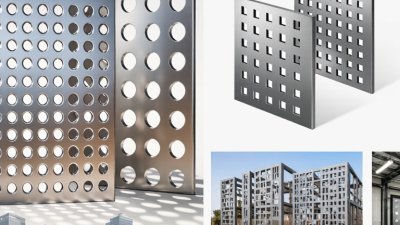
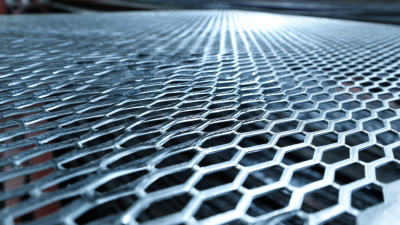
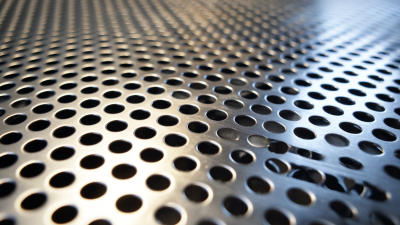
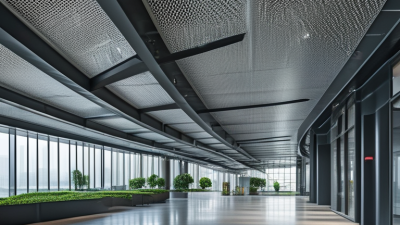
Perforated Metal Screen products serve practical needs across architecture, filtration, machinery, and ventilation. Their small details matter: hole shape, open area, sheet thickness, alloy, and finish can change airflow, light, weight, and service life. A façade panel that looks crisp in a sample may behave differently after installation.
Grand View Research’s Perforated Metal Sheets Market Size, Share & Trends Analysis report examines market segments and demand trends. It offers useful context, but it does not rank China’s suppliers or verify their factory capabilities. Buyers should therefore treat supplier claims as starting points. Request current material certificates, dimensional tolerances, sample panels, and project references. Check whether quoted specifications match the drawings, not merely the product photos.
This guide compares ten China-based suppliers through practical purchasing criteria, including product range, customization, quality documentation, and export experience. One limitation deserves attention: comparable public data on defect rates and delivery performance is rarely available. Supplier rankings should not imply audited performance. Also, I could not verify a topic-specific quotation from a named perforated-metal expert, so I have not invented one. That restraint is intentional. For a real project, confirm the screen’s intended load, exposure, and maintenance conditions with a qualified engineer before ordering. A polished finish is not proof of a suitable specification.
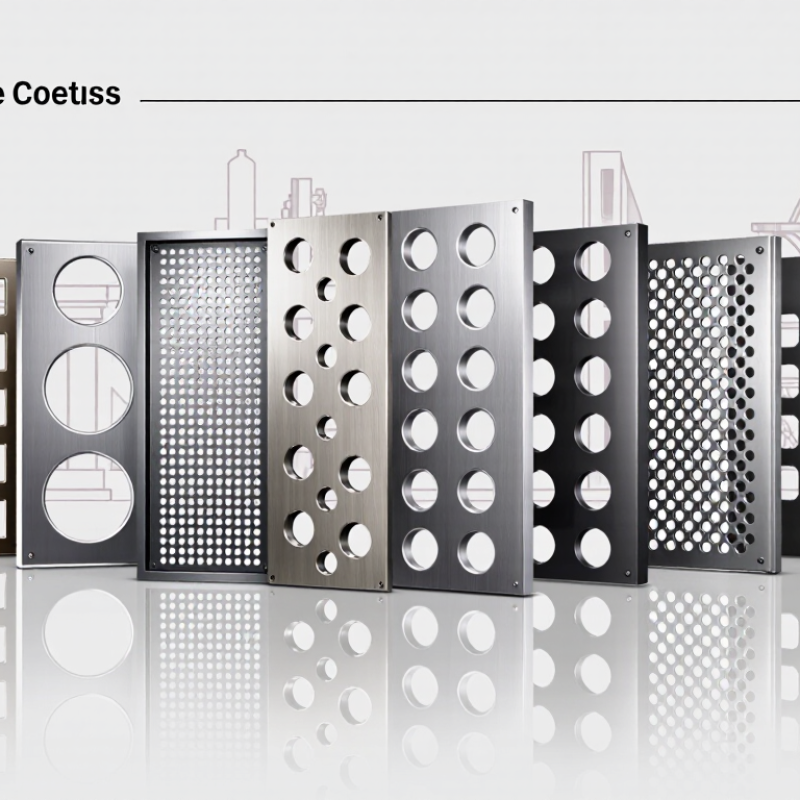
A perforated metal screen is a sheet with regularly spaced openings. Holes may be round, square, or slotted, depending on the required airflow, visibility, and screening performance. The remaining metal, called the land, supports the sheet. Its width affects strength and the screen’s open area. Small holes, big effects. A pattern that looks simple on paper can change how light, sound, and air pass through a panel.
Manufacturing starts with choosing a metal type, sheet thickness, hole size, and layout. Mechanical punching is common for repeated patterns and larger runs. Laser cutting can suit custom shapes or smaller batches. After cutting, workers may remove sharp edges, flatten the sheet, and apply a finish to suit its intended environment. The process is not perfectly uniform: tooling wear, sheet movement, and finishing can affect the final result. That deserves a careful check.
Tips: Request a sample or a dimensioned drawing before ordering. Confirm hole diameter, spacing, sheet thickness, edge margins, and open area. Also ask how burrs and flatness are inspected. These details can be easy to miss, even with a clear specification.

China Top 10 Perforated Metal Screen Suppliers: Common Materials, Hole Patterns, and Industrial Applications
Perforated screens are made from stainless steel, aluminum, and carbon steel. Stainless steel resists moisture and suits food-processing areas or outdoor equipment. Aluminum is lighter, which can reduce load on guards and panels. Carbon steel is often chosen for sturdy indoor structures, but it may need a protective finish. Material choice affects weight, corrosion resistance, and service life—not just price.
Hole patterns shape how a screen performs. Round holes are common for filtration, ventilation, and machine guards. Slotted holes can guide airflow or allow liquid to drain in a chosen direction. Square patterns may provide a distinctive appearance, though sharp corners can collect debris. Open area matters. A dense pattern blocks more material but may restrict airflow. Applications range from building facades and ceiling panels to grain handling, HVAC systems, and equipment enclosures.
Tips: Match hole size to the material being screened, then check the required open area. Small details matter. Measure the panel and frame separately; they may not share the same usable dimensions. One trade-off is easy to miss: a screen that looks clean on a drawing can be harder to wash after installation. Test a sample when fit, airflow, or cleaning access is uncertain.
For staggered round holes on an equilateral pitch, open area increases as the hole diameter approaches the pitch. Perforated screens are commonly made from stainless steel, carbon steel, aluminum, or galvanized steel and used for screening, filtration, ventilation, and guarding.
Ideal geometric estimates use open area = (π / 2√3) × (hole diameter / pitch)². Actual screen open area may vary with hole shape, layout, tolerances, and sheet edges.
A reliable supplier should explain how sheet thickness, hole size, pitch, and open area affect your application. Ask for a drawing with tolerances, not just a product photo. If the screen will filter fine particles, request a sample and measure the openings yourself. Small details matter.
Check what happens between order confirmation and shipment. Ask how the supplier checks hole alignment, edge quality, flatness, and coating thickness. A clear inspection report should identify the measurement method and show actual results. Request material certificates when grade matters, and confirm that the certificate matches the batch being offered. Vague answers are a reason to ask more questions.
Look for practical experience with your intended use, such as ventilation panels, guards, or architectural facades. Discuss expected loads, cleaning methods, and exposure to moisture before settling on a finish. A capable supplier will flag trade-offs instead of promising that one mesh suits every job. Still, documents cannot replace a production sample. Compare samples under consistent lighting, check cut edges, and test-fit one panel if dimensions are critical. I would not treat a polished quotation as proof of consistent production; suppliers can miss details, and buyers can too.
Profiles of China’s top 10 perforated metal screen suppliers are most useful when they explain capability, not just catalog size. A practical comparison looks at sheet thickness, hole patterns, open area, materials, and finishing options. One supplier may focus on standard carbon-steel panels and repeat orders; another may handle custom patterns for façades or equipment guards. Others may produce stainless-steel screens for filtration, detailed cutouts, or large architectural panels. These are capability profiles, not a verified ranking. Details matter. Check whether stated limits apply to your required material, thickness, and panel size.
Useful profiles also describe quality controls, such as material checks, tooling maintenance, dimensional inspection, and edge protection during packing. Ask for a drawing review and a sample made using the intended production process. Compare aperture tolerance, burr condition, flatness, and coating consistency against written criteria. Request material and inspection documents where relevant, then check them against the specification. A polished website is not proof. Some supplier descriptions leave gaps; that calls for a follow-up, not an assumption.
Tips: Send a marked-up drawing with material, thickness, hole size, pitch, finish, and tolerance requirements. Ask each supplier to confirm any limits before requesting a quote.
Anonymous, non-ranked sourcing profiles. These are common supplier specializations and product considerations, not verified profiles of ten named companies. Specifications, certifications, production capacity, and availability vary by supplier and should be confirmed directly.
| Profile | Common Product Focus | Materials Commonly Offered | Typical Applications | Useful Specification Checks | Information to Confirm with the Supplier |
|---|---|---|---|---|---|
| Architectural screen specialist | Decorative and functional perforated panels for building exteriors and interiors | Aluminum, stainless steel, and carbon steel | Facades, sunscreens, partitions, and ceiling panels | Open area, hole pattern, panel flatness, finish, and fixing details | Available panel sizes, color or finish options, fabrication tolerances, and weathering suitability |
| Industrial screening producer | Perforated sheets and fabricated screens for material handling and process equipment | Carbon steel, galvanized steel, and stainless steel | Screening equipment, guards, hoppers, and machine enclosures | Hole shape, sheet thickness, open area, edge condition, and wear requirements | Compatibility with the equipment, required load conditions, and replacement-panel dimensions |
| Stainless steel perforation specialist | Corrosion-resistant perforated sheets and cut-to-size components | Stainless steel grades selected for the application | Food-processing areas, chemical facilities, filtration, and architectural projects | Stainless grade, hole dimensions, deburring, surface finish, and cleaning requirements | Material traceability, grade documentation, finishing options, and suitability for the operating environment |
| Aluminum panel fabricator | Lightweight perforated panels with secondary forming and finishing | Aluminum alloys and coated aluminum sheet | Building cladding, ventilation panels, signage, and equipment covers | Alloy, thickness, pattern orientation, coating, and fastening method | Forming limits, coating specifications, color consistency, and dimensional tolerances |
| Custom-pattern perforation shop | Panels produced to customer drawings or project-specific patterns | Aluminum, stainless steel, and carbon steel, subject to tooling | Custom facades, branded environments, bespoke screens, and prototypes | Pattern repeat, hole-to-sheet proportions, border margins, and drawing revision | Tooling availability, minimum order requirements, sample approval process, and achievable tolerances |
| Perforated coil and sheet supplier | Perforated material supplied in sheet or coil formats where production allows | Commonly specified metals such as steel, stainless steel, and aluminum | Continuous fabrication, ventilation products, filters, and downstream conversion | Coil or sheet dimensions, material thickness, pattern consistency, and edge condition | Available formats, winding direction if applicable, packaging, and inspection documentation |
| Sound-control panel fabricator | Perforated face sheets used as components in acoustic assemblies | Steel, aluminum, or stainless steel, depending on the assembly | Acoustic wall panels, enclosures, equipment rooms, and noise-control systems | Perforation geometry, backing material, assembly design, and tested acoustic performance | Whether performance data applies to the complete assembly and the specified installation conditions |
| Filtration and separation screen supplier | Perforated components used as support, screening, or separation media | Stainless steel and other metals selected for process conditions | Strainers, process equipment, liquid handling, and particle separation | Opening size, open area, material grade, burr control, and operating conditions | Required particle retention, pressure or temperature conditions, and cleaning method |
| Perforated safety-guard manufacturer | Protective panels and guards designed around equipment or access requirements | Carbon steel, galvanized steel, stainless steel, and aluminum | Machine guards, walkways, ventilation covers, and protective enclosures | Panel strength, opening size, edge treatment, mounting points, and applicable safety requirements | Project-specific compliance obligations, load requirements, and installation details |
| Fabrication and finishing partner | Perforated sheet combined with cutting, bending, welding, or surface finishing | Metal selected to suit the finished component and environment | Equipment housings, fabricated screens, architectural components, and custom assemblies | Finished-part dimensions, bend locations, weld details, finish, and inspection criteria | Process scope, drawing approval, packaging protection, and responsibility for final assembly |
Comparing Supplier Capabilities, Products, and Services
Comparing suppliers takes more than matching hole patterns. Check whether each can produce your required metal, thickness, aperture, pitch, and panel size. Ask about cutting, forming, deburring, finishing, packaging, and export support. Grand View Research estimated the global metal fabrication market at USD 20.47 billion in 2023, with projected annual growth of 4.2% from 2024 to 2030. This broad market figure is not specific to perforated screens, but it reflects a competitive fabrication sector.
Compare sample quality and documented controls, not just catalog options. Request material certificates, inspection records, dimensional tolerances, and batch traceability. For a façade screen, inspect flatness, clean edges, consistent openings, and coating coverage under angled light. For ventilation or filtration, compare open area and airflow requirements alongside strength. A polished sample can still hide uneven production between batches. That risk deserves attention.