Inquiry
Form loading...

What Is Perforated Copper Sheet Used For?

Perforated Copper Sheet is more than a decorative metal panel. Its precisely punched openings can manage airflow, light, sound, heat, and visual privacy. Copper also offers excellent electrical and thermal conductivity. That combination makes it useful in architecture, electrical equipment, ventilation covers, acoustic panels, and industrial heat-management systems.

Metalwork specialist Dr. Heinz-Peter Schmitz has described perforated metal in practical terms: “A perforation is not merely a hole; it is a controlled function.” This idea explains why hole diameter, spacing, open area, and sheet thickness matter so much. A tightly patterned sheet may filter particles or soften light. A larger pattern may improve ventilation or reduce weight. In a copper façade, the surface can gradually develop a natural patina, changing from bright orange to deeper brown and green tones. That change is attractive to some designers. Others may consider it a maintenance concern.

In real projects, Perforated Copper Sheet must match the environment. Outdoor exposure, moisture, cleaning chemicals, and contact with dissimilar metals can influence performance. Designers should check corrosion risks, structural support, edge finishing, and electrical requirements before ordering. Small details matter.

It is not always the perfect choice.

Copper costs more than steel or aluminum, and its softness can allow dents during handling. Still, when conductivity, appearance, and controlled openness are important, copper can provide a durable and distinctive solution. The following sections examine where it works best, where it may fail, and how to select it responsibly.
What Is Perforated Copper Sheet Used For?

What Is Perforated Copper Sheet?

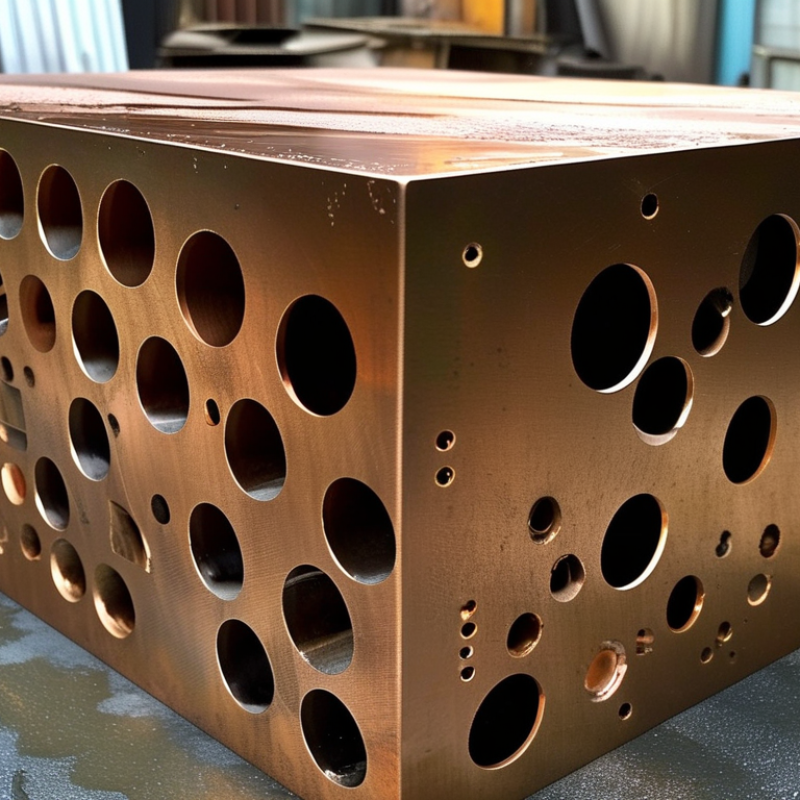
Perforated copper sheet is a flat copper panel manufactured with regularly spaced holes. The holes may be round, square, slotted, or custom-shaped. Their size and spacing affect airflow, light transmission, weight, and strength. Copper remains valuable because it conducts heat and electricity efficiently. It also resists corrosion in many indoor and outdoor environments, although its surface may develop a greenish patina over time.

Manufacturers produce these sheets in different thicknesses and hole patterns. A fine pattern can protect openings while allowing ventilation. Larger openings provide better airflow but reduce privacy and structural rigidity. In practice, perforated copper sheet appears in ventilation covers, acoustic panels, electrical shielding, decorative wall features, and heat-management components. It can also support architectural details where its warm color adds visual character.

Handle it carefully.

Copper is softer than steel, so cutting and bending can leave dents or distorted edges. I have found that choosing the hole pattern before selecting the thickness prevents many design problems. However, copper is not suitable for every wet or chemical environment. Contact with certain metals can encourage galvanic corrosion, especially where moisture remains trapped. Protective coatings may reduce staining, but they can change the natural appearance and thermal performance. This trade-off deserves attention during specification.
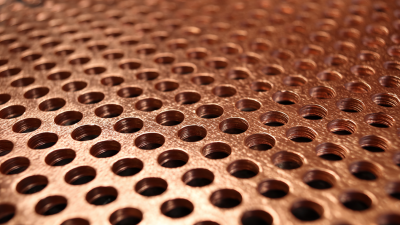

What Is Perforated Copper Sheet Used For?

Perforated copper sheet is copper plate manufactured with regularly arranged holes. It combines copper’s high electrical and thermal conductivity with controlled airflow, light transmission, drainage, and acoustic performance.

Why the material is useful: Copper has much higher thermal conductivity than other commonly used sheet metals, making perforated copper suitable for heat-dissipation covers, ventilation panels, electrical and electromagnetic shielding, speaker grilles, decorative architectural panels, and filtration components. The values shown are typical room-temperature thermal-conductivity values; exact performance varies by alloy, temper, thickness, and operating conditions.

How Perforated Copper Sheet Is Manufactured

Perforated copper sheet is used for electrical shielding, ventilation panels, decorative surfaces, and lightweight filters. Its value begins with controlled manufacturing. Copper conducts heat and electricity efficiently, but it is also relatively soft. That combination demands careful handling during production.

Manufacturing usually starts with copper sheet selected for the required thickness, temper, and conductivity. The sheet is leveled before perforation, because surface tension can distort the hole pattern. A punching press then creates round, square, slotted, or custom openings through a shaped tool. For short runs or intricate designs, laser cutting may offer better flexibility, although it can produce heat-affected edges and higher costs. Rotary perforation is suitable for consistent, high-volume patterns.

After perforation, operators remove sharp burrs through brushing, tumbling, or controlled finishing. The sheet is leveled again if punching has caused warping. Technicians inspect hole diameter, open area, sheet thickness, and edge condition with gauges or optical equipment. These checks matter when the sheet must fit a ventilation frame or maintain electromagnetic shielding performance.

Small details can change the result. A tight hole pitch may weaken the sheet, while excessive open area can reduce stiffness. Copper can also scratch easily during stacking. The process is not perfectly simple. In practice, manufacturers sometimes adjust tool clearance after testing the first batch, because theoretical settings may not match the copper’s actual temper. Some imperfections remain, and they should be documented rather than hidden.

What Is Perforated Copper Sheet Used For? - How Perforated Copper Sheet Is Manufactured

Data Dimension Typical Data or Specification Application or Manufacturing Significance
Primary Material Commercially pure copper sheet Copper provides high electrical and thermal conductivity, good corrosion resistance, and a naturally antimicrobial surface.
Common Copper Grades C11000, C10100, and C12200 C11000 is widely used for general fabrication; oxygen-free grades are selected for demanding electrical or vacuum-related applications; phosphorus-deoxidized copper is suitable for many formed components.
Typical Sheet Thickness Approximately 0.5–6.0 mm Thinner sheets are used for screens, covers, and decorative panels, while thicker sheets are selected for guards, structural inserts, and robust filtration parts.
Typical Hole Diameter Approximately 0.5–10 mm The selected opening controls airflow, light transmission, filtration performance, weight reduction, and visual appearance.
Hole Pattern Round staggered, round straight, square, slotted, or custom patterns Staggered round holes can provide a high open area, while straight, square, and slotted patterns are chosen for alignment, appearance, or directional flow requirements.
Open Area Commonly about 20–60%; calculated from hole size and pitch Open area affects airflow, acoustic transmission, pressure drop, screening efficiency, and the remaining strength of the sheet.
Round Staggered Open-Area Formula Open area (%) ≈ 90.7 × (d ÷ p)² In this formula, d is the hole diameter and p is the center-to-center pitch, with both dimensions expressed in the same units.
Electrical Applications Busbar covers, grounding components, shielding panels, and ventilation screens for electrical enclosures Copper combines conductivity with a perforated structure that can allow cooling air to pass through while providing partial protection or shielding.
Thermal Management Heat-dissipation panels, ventilation grilles, and air-distribution screens Perforations increase air passage through a panel, and copper efficiently conducts heat away from connected components.
Filtration and Screening Particle screens, guards, strainers, and separation panels Hole size and pattern determine the approximate screening range; perforated sheet is generally used for coarse screening rather than fine filtration.
Acoustic and Architectural Uses Acoustic wall panels, ceiling panels, decorative partitions, and façade details The regular pattern can provide a distinctive appearance and, when combined with an acoustic backing, can support sound-absorption designs.
Industrial Protection Machine guards, equipment covers, cable-protection panels, and access screens The sheet provides visibility and ventilation while helping restrict access to moving parts or sensitive equipment.
Cutting or Blanking The flat copper sheet is cut to the required length and width before or after perforation Shearing, laser cutting, waterjet cutting, or other methods may be selected according to thickness, edge tolerance, production volume, and the required finish.
Perforation Method Mechanical punching with a press and perforating tooling Punching is suitable for repeated patterns and high production volumes. Tooling determines hole shape, pitch, and production speed.
Alternative Perforation Methods Laser cutting, waterjet cutting, or CNC machining These methods are useful for prototypes, small batches, thick material, complex patterns, or applications requiring flexible geometry.
Typical Manufacturing Sequence Material inspection → leveling → perforation → trimming → deburring → cleaning → inspection Each stage helps control flatness, dimensional accuracy, edge safety, surface condition, and conformance to the specified hole pattern.
Flatness Consideration Perforation can create local distortion or bowing, especially in thin sheets or high-open-area patterns Leveling, controlled tooling clearance, suitable perforation sequencing, and post-process flattening can reduce deformation.
Deburring Requirement Mechanical brushing, tumbling, edge finishing, or other deburring processes Deburring removes sharp edges and residual burrs produced during punching or cutting, improving handling safety and component fit.
Surface Finishes Mill finish, brushed finish, polished finish, or patinated finish The finish is selected according to electrical performance, appearance, exposure conditions, cleanability, and the desired aging effect.
Dimensional Inspection Sheet thickness, overall dimensions, hole diameter, pitch, open area, flatness, and burr height Checking these dimensions helps ensure that the finished sheet performs correctly in airflow, shielding, filtration, assembly, and architectural applications.
Design Trade-Off Higher open area improves passage but reduces remaining metal and stiffness Designers balance hole size, pitch, sheet thickness, strength, weight, pressure drop, and the required level of protection.

Note: Dimensions and open-area values are typical engineering ranges. Final specifications should be selected according to the required copper grade, sheet thickness, hole pattern, tolerances, operating environment, and applicable standards.

Key Properties That Support Its Applications

What Is Perforated Copper Sheet Used For?

Perforated copper sheet is valued for conductivity, corrosion resistance, and controlled airflow. Its round, slotted, or custom openings reduce weight while retaining useful structural strength. Copper also transfers heat efficiently, supporting covers, vents, heat-dissipation panels, and selected electrical assemblies. In architectural work, its warm color creates screens, ceiling details, and decorative wall surfaces. The sheet can also support electromagnetic shielding, although perforations may reduce shielding performance when openings are too large.

The key properties determine whether the material works in a real application. Thickness affects stiffness, durability, and forming behavior. Hole diameter and open-area percentage control airflow, light transmission, sound movement, and protection from debris. A smaller opening generally offers better screening, but it can restrict ventilation.

Copper develops a surface patina over time. This change may be attractive, but it can alter appearance and contact performance. A clean drawing can hide practical problems. Edges may need deburring, and thin sheets can deform during cutting or installation.

Tips: Match the hole pattern to the required airflow and protection level. Check copper compatibility with nearby metals to reduce galvanic corrosion risks. Confirm the operating temperature and expected cleaning method before selection. For electrical use, verify conductivity after coating, joining, or surface oxidation. Small prototype panels are worthwhile. They often reveal vibration, noise, or installation issues that calculations miss.

Common Industrial and Architectural Uses

Perforated copper sheet combines controlled openings with copper’s natural conductivity and warm appearance. In industrial settings, it serves as a protective screen, ventilation panel, and lightweight filter support. Electrical enclosures may use it to improve airflow while limiting direct contact with internal components. Workshops also form it into guards around machinery, provided the sheet thickness matches the required impact resistance.

It performs well in heat-transfer equipment, acoustic housings, and decorative panels near controlled moisture levels. Copper’s thermal conductivity helps spread heat, while the perforation pattern manages airflow.

Hole size, open area, and sheet gauge must be selected together. A large opening pattern may improve ventilation but reduce strength. Small holes can trap dust and increase cleaning time. That detail is often overlooked.

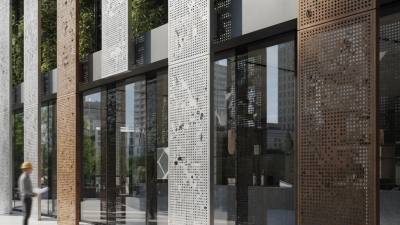
Architects use perforated copper for façades, soffits, screens, ceilings, and interior wall features. Sunlight passing through the openings creates changing shadows across floors and seating areas. Outdoors, copper gradually develops a weathered surface, which can be attractive but unpredictable. Runoff may stain nearby masonry. Proper drainage and compatible fasteners matter. From practical fabrication work, edge finishing deserves attention because rough cutouts can injure installers and weaken folded sections. It is not merely decorative. Even a carefully designed panel may need revision after testing airflow, glare, noise, and maintenance access on site.

Factors to Consider When Choosing Perforated Copper Sheet

Perforated copper sheet is used for ventilation panels, acoustic screens, decorative façades, electrical shielding, and heat-management components. Its evenly spaced openings allow air, light, or sound to pass through while copper provides excellent electrical and thermal conductivity. Choosing the right sheet requires more than checking its appearance.

Start with the application and required performance. Hole diameter, pitch, and open area control airflow, visibility, and structural strength. Smaller holes may improve screening, but they can restrict ventilation and collect dust.

Thickness also matters. Thin copper is easier to form, while thicker sheet resists dents and vibration. It is a trade-off.

Consider the copper grade and service environment carefully. Outdoor projects may expose the sheet to moisture, salt, or chemical vapors, which can accelerate surface changes. Natural oxidation is not always a defect, but the final appearance should be agreed upon before installation. If the sheet carries electrical current, verify conductivity and connection methods with a qualified engineer. Thermal applications require attention to heat transfer, mounting pressure, and airflow around the panel.

Installation details are often underestimated. Sharp perforation edges may require deburring, protective gloves, or framed borders. Confirm flatness, hole tolerance, and cutting dimensions before ordering. Requesting a sample can reveal color, rigidity, and surface texture more accurately than photographs. I would also check cleaning requirements, because aggressive products can damage copper’s developing patina. Lowest price is not always the lowest practical cost.