Inquiry
Form loading...
China has become a major sourcing destination for Perforated Screen Panels, serving architecture, equipment enclosures, ventilation, and interior design. Yet a low quote tells only part of the story. Buyers should compare alloy and sheet thickness, hole shape, open area, flatness, edge treatment, and coating consistency. Details matter. A neat sample can still hide uneven punching or weak packaging.
Materials engineer Lin Wei offers this practical rule: “Choose the panel by its job, then verify every dimension against a real sample.” Treat that as a useful selection principle, not a substitute for documented specifications. This guide examines Chinese manufacturers through capabilities, product range, customization, quality checks, and communication. It also considers how suppliers handle drawings, tolerances, prototypes, and delivery protection. Ask for current test records where relevant, and confirm that quoted finishes match the intended environment. Small gaps in a specification can become visible problems after installation.
No ranking can replace a factory audit or a careful sample review. Some manufacturers excel at high-volume standard sheets; others are better suited to short runs or custom patterns. There is no perfect supplier for every project. The comparisons ahead aim to make those differences clearer, while noting where public information may be incomplete. Use them to build a shortlist, ask sharper questions, and verify claims before placing an order.
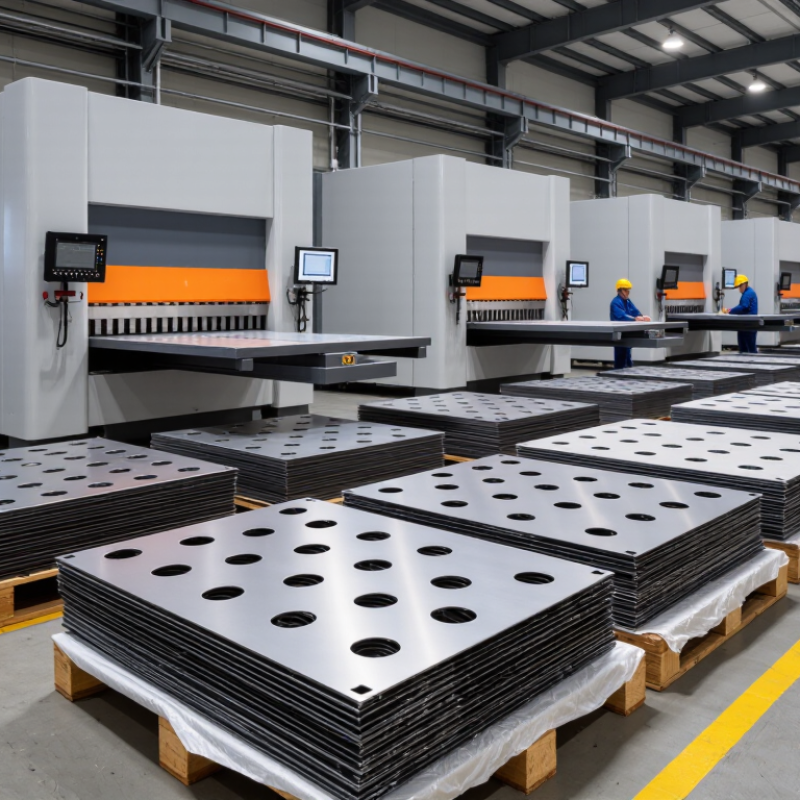
Perforated screen panels are defined by more than their visible holes. Material choice affects weight, corrosion resistance, and how the panel behaves during cutting and installation. Stainless steel suits damp or washdown areas; carbon steel is often selected when strength and finishing options matter. Aluminum is lighter, but may flex more across a wide, unsupported span. Check the service environment and support layout before comparing prices.
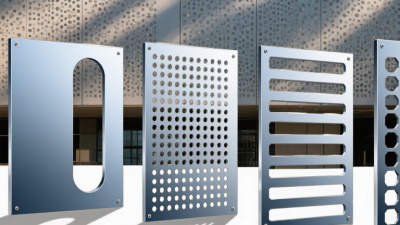
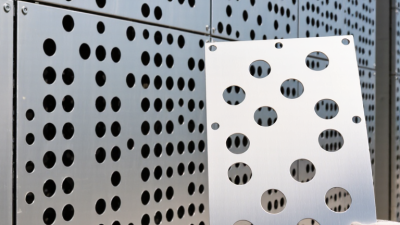
Hole pattern changes both appearance and performance. Round holes are common, while square and slotted openings can suit different screening needs. Hole diameter describes the opening; pitch is the center-to-center distance between openings. Open area means the percentage of the sheet occupied by holes. More open area can improve airflow, but it may reduce stiffness. Small differences in pitch are easy to miss on a drawing. They show up clearly across a large panel.
Ask suppliers to state sheet thickness, hole size, pitch, open area, and dimensional tolerance. Gauge can be ambiguous because numbering conventions vary, so confirm the actual thickness in millimeters. Edge condition matters, too. Burrs can complicate handling and fitting, while a border may be needed for mounting. A sample helps verify the pattern and finish, though it cannot reveal every issue in a full production run. That limitation is worth discussing.
| Category | Option or Term | Description | Typical Considerations |
|---|---|---|---|
| Material | Carbon steel | A widely used steel substrate for general-purpose screening, guarding, and ventilation panels. | Often selected for strength and cost; coating or painting may be needed where corrosion protection is required. |
| Material | Stainless steel | An iron-based alloy containing chromium; common grades include 304 and 316. | Grade selection depends on the environment. Grade 316 generally offers better resistance to chlorides than grade 304. |
| Material | Aluminum | A lightweight, formable material used for architectural, ventilation, and equipment-screen applications. | Consider load requirements, alloy, finish, and potential contact with dissimilar metals. |
| Material | Galvanized steel | Steel protected by a zinc coating to help resist corrosion. | Specify whether the sheet is galvanized before or after perforating; cut edges and subsequent fabrication can affect protection. |
| Hole pattern | Round holes, staggered pattern | Round openings arranged in offset rows, commonly producing a triangular layout. | A common pattern for general screening; hole diameter, pitch, sheet thickness, and edge margins affect strength and open area. |
| Hole pattern | Round holes, straight pattern | Round openings aligned in parallel rows and columns. | Alignment may suit some layout or airflow requirements; compare open area and remaining material with a staggered pattern. |
| Hole pattern | Square holes | Square openings arranged in a regular grid or staggered layout. | Useful where a square aperture is required; sharp internal corners can influence stress and cleaning behavior. |
| Hole pattern | Slotted holes | Elongated openings, commonly specified by slot width, slot length, and arrangement. | Slot orientation can affect drainage, screening, and panel stiffness; define the direction relative to the panel edges. |
| Key dimension | Hole size | The diameter or width of an opening, measured according to the selected hole shape. | State the measurement method and units on the drawing; actual production tolerances should be agreed with the supplier. |
| Key dimension | Pitch | The center-to-center distance between adjacent holes in a specified direction. | For staggered patterns, specify the pitch in both relevant directions or provide a clear pattern drawing. |
| Key term | Open area | The percentage of the panel's gross area occupied by perforations. | For round holes on a triangular staggered layout, a common theoretical formula is 90.69 × (hole diameter ÷ pitch)² × 100%, when diameter and pitch use the same units. Edge margins and framing are excluded. |
| Key dimension | Sheet thickness | The thickness of the unperforated sheet material. | Thickness affects rigidity, weight, forming, and suitability for the application; confirm the required thickness and its tolerance. |
| Key term | Ligament | The strip of material remaining between neighboring holes. | Smaller ligaments can increase open area but may reduce panel strength; evaluate the complete panel design and support conditions. |
| Fabrication | Unperforated margins | Solid border areas left around the perforated field for fastening, framing, or handling. | Specify margin dimensions and whether they are measured from the panel edge to the first hole center or to the perforated-field boundary. |
| Finish | Paint, powder coating, or anodizing | Surface treatments used for appearance or added protection, depending on the base material and process. | Confirm the treatment sequence, coating coverage inside openings, color requirements, and service environment. |
| Quality check | Dimensional and visual inspection | Checks may cover panel dimensions, hole size, pitch, flatness, burrs, and visible surface condition. | Define inspection criteria, sampling, and acceptance tolerances in the purchase specification or approved drawing. |
Specifications and tolerances vary by material, tooling, panel size, and production process. Confirm final dimensions, finish, and acceptance requirements against an approved drawing.