Inquiry
Form loading...
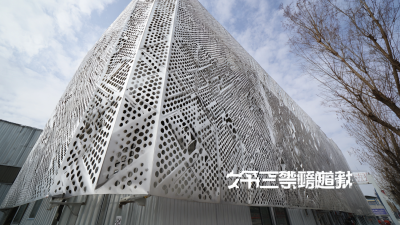
Choosing the best Decorative Expanded Metal suppliers in China requires more than comparing prices or catalogue images.
The material combines strength, airflow, daylight, and visual texture in one sheet. It appears in façades, ceilings, partitions, balustrades, screens, and retail interiors. World Steel Association reported global crude steel production of about 1.88 billion tonnes in 2024. That scale supports broad material availability, but it does not guarantee reliable fabrication or finishing.
Supplier evaluation must examine mesh patterns, strand width, open area, sheet thickness, flatness, tolerances, and coating performance. ASTM F1267 provides useful terminology and testing references for expanded metal products. Architectural projects may also require fire, corrosion, slip, or structural documentation. Requirements differ by location and application.
Dieter Rams, a respected industrial designer, said, “Good design is as little design as possible.” His principle fits Decorative Expanded Metal surprisingly well. A strong supplier should make the pattern serve the building, not overpower it.
Look closely.
A dependable Chinese manufacturer should provide physical samples, mill certificates, coating data, production photographs, and traceable inspection records. Factory experience matters too. Laser-cut borders, uneven ribs, and chipped powder coating can become obvious under façade lighting.
Market reports from Grand View Research and MarketsandMarkets indicate continuing demand for architectural metal systems, although their categories are broader than Decorative Expanded Metal. That limitation deserves attention. Buyers should not treat general metal-market forecasts as direct product forecasts.
The strongest shortlist balances engineering evidence, customization capability, communication quality, and long-term quality control. Price still matters. It should not become the only decision.
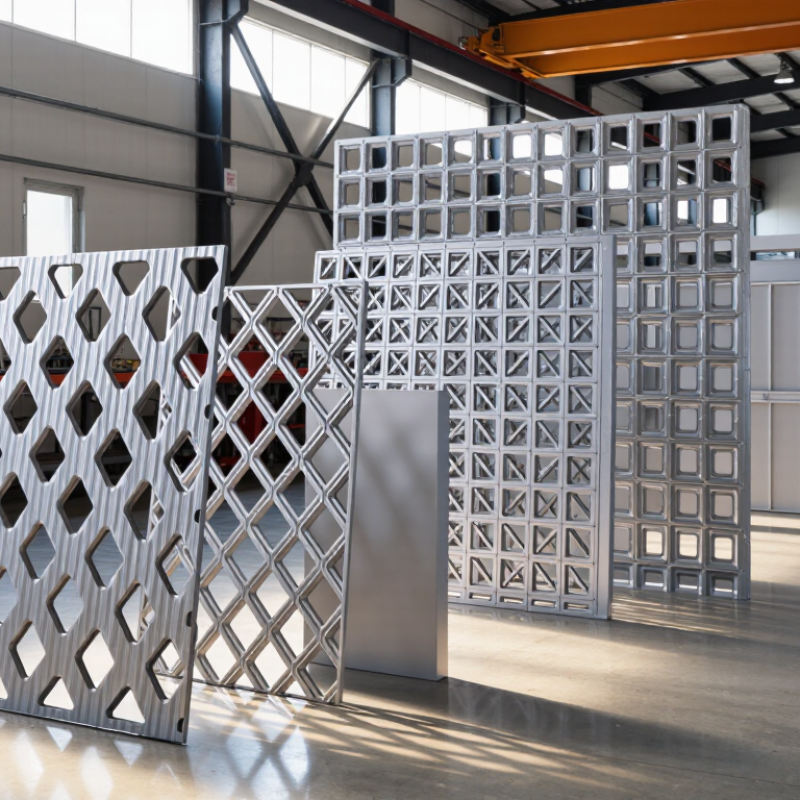
Decorative expanded metal is a single sheet cut and stretched into a repeating pattern. It contains no welded intersections. The raised strands create texture, shadow, airflow, and visual depth.
SWD means Short Way of Diamond, measured across the shorter diamond opening. LWD means Long Way of Diamond, measured along its longer opening. These dimensions affect alignment, panel appearance, and installation waste. Strand width describes the metal left between openings. Strand thickness refers to the original sheet thickness. Both influence rigidity, weight, and edge strength.
Open area usually ranges from 30% to 70%. A 30% open area offers stronger screening and greater privacy. A 70% open area allows more daylight and ventilation. However, high openness can reduce visual coverage. It may also make thin strands feel less substantial. Suppliers should provide certified measurements, material grades, panel dimensions, and tolerance data. Samples should be checked under natural light, not only showroom lighting. Use a caliper for strand width and a ruler for SWD and LWD. Small errors matter.
Pattern direction deserves attention. Rotating a panel can change its shadow and apparent density. I have seen drawings that ignored this detail. The result looked acceptable on paper but uneven after installation. A dependable supplier should explain production limits, surface treatment, packaging, and inspection records clearly. Ask for a sample first. Fancy patterns still need accurate engineering.
A practical technical comparison table for evaluating decorative expanded metal specifications, material choices, surface finishes, and supplier documentation.
| Data Dimension | Definition or Typical Data | Common Decorative Design Range | Selection and Quality Considerations |
|---|---|---|---|
| Product Type | Expanded metal is produced by simultaneously slitting and stretching a single sheet or coil, creating a continuous diamond-shaped mesh without welded joints. | Flattened expanded metal or raised expanded metal. | Flattened mesh provides a smoother face and is often preferred for screens, ceilings, partitions, and interior decoration. Raised mesh provides stronger three-dimensional texture and light-and-shadow effects. |
| SWD Short Way of Diamond |
The shorter distance measured from the midpoint of one diamond opening to the midpoint of the adjacent opening across the short direction. | Approximately 2–10 mm for many decorative applications. | Smaller SWD generally creates a finer visual pattern and can improve screening privacy. The exact value should be confirmed on the supplier’s drawing because mesh terminology and measuring points must remain consistent. |
| LWD Long Way of Diamond |
The longer distance measured from the midpoint of one diamond opening to the midpoint of the adjacent opening across the long direction. | Approximately 4–20 mm for many architectural and decorative designs. | LWD influences the apparent length of the diamond pattern, panel appearance, and the number of openings across a panel. It should be specified together with SWD rather than used alone. |
| Strand Width | The width of the metal strip forming each side of the expanded diamond opening. | Approximately 0.5–3.0 mm, depending on sheet thickness and tooling. | A wider strand usually gives a heavier visual line and greater local robustness, while a narrower strand creates a lighter appearance. Strand width is not the same as sheet thickness. |
| Sheet Thickness | The original thickness of the metal sheet before expansion and any flattening operation. | Approximately 0.5–3.0 mm for common decorative panels. | Thickness affects stiffness, weight, forming behavior, and edge stability. The finished thickness of flattened mesh may differ from the original sheet thickness, so both values should be recorded when required. |
| Open Area | The percentage of the total panel area that remains open after expansion. | 30–70% is a practical decorative design band; some patterns may fall outside this range. | Lower open area generally provides greater visual screening and shading. Higher open area allows more airflow, daylight, and visibility. Open area should be calculated from the specified mesh geometry and verified on production samples. |
| Mesh Orientation | The direction in which the LWD and SWD are aligned on the panel. | Standard orientation, transverse orientation, or customer-defined layout. | Orientation changes the visual rhythm, cutting yield, perceived stiffness, and installation appearance. Drawings should identify the LWD direction with an arrow. |
| Common Base Materials | Metals commonly used for decorative expanded mesh include mild steel, aluminum, and stainless steel. | Mild steel Aluminum 304 stainless steel 316 stainless steel | Mild steel is economical and suitable for painted or galvanized finishes. Aluminum offers low weight and corrosion resistance. Stainless steel is selected for higher corrosion resistance, durability, and a metallic architectural appearance. |
| Typical Surface Finishes | Finishing options used to improve appearance, corrosion resistance, or color consistency. | Mill finish, powder coating, wet painting, anodizing for suitable aluminum grades, and galvanizing for suitable steel products. | Specify color reference, gloss level, coating thickness, pretreatment, and test requirements. Finish suitability depends on the base metal and the intended indoor or outdoor exposure. |
| Panel Flatness | The degree to which a cut panel remains free from excessive bow, twist, or waviness. | Project-specific; commonly controlled by panel size, mesh geometry, material, flattening process, and frame design. | Large panels and low-thickness materials are more sensitive to distortion. Request a flatness requirement, acceptable visual limit, and approved reference sample before mass production. |
| Dimensional Verification | Inspection of SWD, LWD, strand width, thickness, panel length, panel width, and open area. | Inspection frequency and tolerances should be stated in the purchase specification. | Supplier documentation should include a dimensional inspection report, material certificate where applicable, finish information, and photographs or samples for approval. |
| Typical Applications | Decorative expanded metal is used where visual texture, partial screening, airflow, and light transmission are required. | Interior partitions, ceiling panels, wall cladding, balustrade infill, façade screens, retail displays, signage back panels, and light fixtures. | For load-bearing guards, fall protection, flooring, or security applications, decorative specifications alone are not sufficient; structural design, applicable local codes, and separate safety testing may be required. |
| Supplier Comparison Criteria | Technical capability, repeatability, material traceability, finishing quality, packaging, and export documentation. | Compare suppliers using the same approved drawing, sample size, material grade, finish specification, tolerance requirements, and inspection plan. | A reliable quotation should clearly state material, SWD, LWD, strand width, thickness, open area, panel size, finish, quantity, packaging, lead time, and inspection documents instead of providing only a price per square meter. |
Specification note: The ranges in this table are commonly used design references rather than universal limits. Final values should be confirmed by an approved technical drawing, production sample, and inspection standard before ordering.