10 Best Decorative Expanded Metal Suppliers
Choosing the right supplier for Decorative Expanded Metal requires more than comparing photographs and quoted prices. A reliable manufacturer should explain material grades, opening patterns, strand dimensions, finishes, and production tolerances clearly. These details affect appearance, strength, installation, and long-term maintenance.
Real experience matters. A supplier familiar with architectural screens can recommend suitable aluminum, steel, or stainless steel for façades, partitions, ceilings, and protective features. Ask about sample panels. A small sample can reveal sharp edges, uneven coating, or unexpected shadow effects before a large order begins. It also shows whether the supplier understands your design intent.
Look for documented quality procedures, consistent inspection records, and practical project references. Certifications may support credibility, but they should not replace direct technical answers. A trustworthy supplier will discuss tooling, mesh sizes, surface treatments, packaging, lead times, and replacement policies without hiding limitations.
Details matter most.
The ten suppliers in this guide are considered through those practical standards. Their capabilities may differ by region, material availability, customization range, and production scale. Some may excel at precision patterns, while others offer stronger finishing support or shorter delivery schedules. No supplier is perfect. Even experienced manufacturers can face color variation, capacity changes, or communication gaps.
That uncertainty deserves attention. Buyers should verify current specifications, request recent samples, and confirm commercial terms before making a decision. This careful approach helps architects, contractors, and purchasing teams select Decorative Expanded Metal with greater confidence and fewer costly surprises.
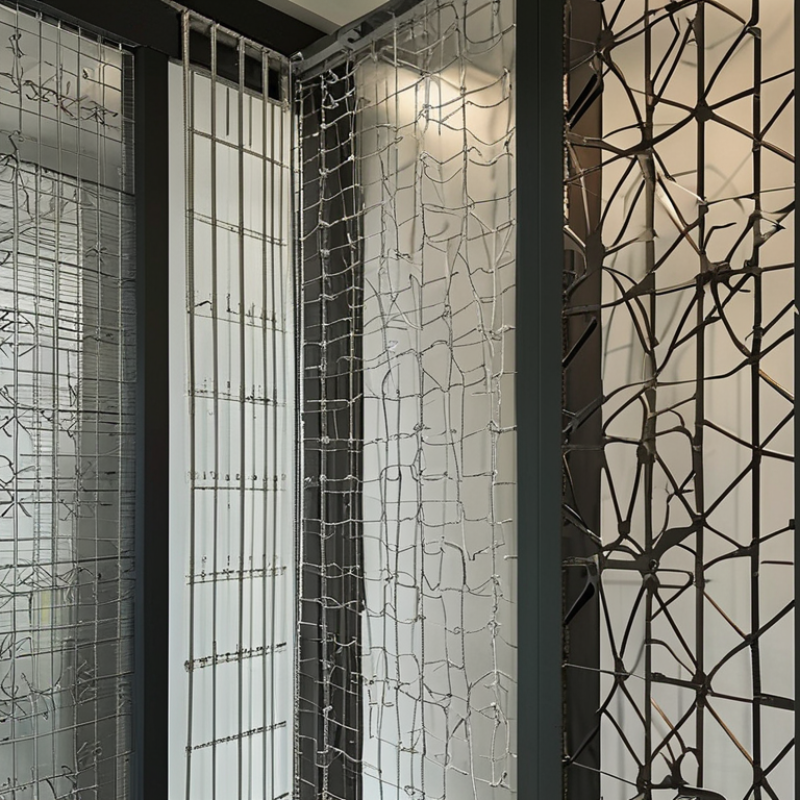
How Decorative Expanded Metal Is Made: SWD, LWD, Strand Width, and Gauge
Decorative expanded metal begins as a solid sheet. A press makes precise, staggered cuts, then stretches the sheet into a repeating pattern. No welding is needed. The openings form in one operation, preserving a continuous metallic structure. For decorative projects, designers balance light transmission, privacy, airflow, and visual rhythm. That balance is easy to underestimate.
SWD means Short Way of Design, measured across the shorter opening direction. LWD means Long Way of Design, measured across the longer direction. These dimensions control the pattern’s scale and installation orientation. Gauge describes the sheet’s thickness, while strand width measures the metal strip between adjacent openings. A thicker gauge usually improves rigidity, but it also increases weight. Strand width changes shadow density and surface presence.
When comparing suppliers, request a sample with documented SWD, LWD, strand width, gauge, alloy, finish, and tolerances. Inspect flatness, cut edges, burrs, and dimensional consistency. Do not judge only by photos. A small sample can reveal distortion that drawings hide. In practical use, powder coating or backlighting may change the pattern’s appearance. Review the finished sample under actual project lighting. One detail is often missed: different suppliers may measure openings from different reference points. Confirm the measurement method in writing before approving production.
10 Best Decorative Expanded Metal Suppliers - How Decorative Expanded Metal Is Made: SWD, LWD, Strand Width, and Gauge
The supplier-neutral specifications below summarize common decorative expanded-metal configurations. Dimensions are shown in inches and millimeters where useful. Exact availability, tolerances, sheet size, finish, and gauge designation should be confirmed against the supplier’s technical data sheet.
| No. |
Decorative application profile |
SWD
Short Way of Diamond |
LWD
Long Way of Diamond |
Strand width |
Sheet thickness |
Nominal gauge reference* |
Typical visual and functional result |
| 1 |
Fine diamond infill |
0.25 in
(6.4 mm) |
0.50 in
(12.7 mm) |
0.047 in
(1.2 mm) |
0.063 in
(1.6 mm) |
16–14 |
Small openings, refined texture, and relatively high visual privacy for screens and cabinet panels. |
| 2 |
Small architectural diamond |
0.50 in
(12.7 mm) |
1.00 in
(25.4 mm) |
0.047 in
(1.2 mm) |
0.063 in
(1.6 mm) |
16–14 |
Balanced openness and screening, suitable for decorative partitions and ventilation covers. |
| 3 |
Medium diamond façade panel |
0.50 in
(12.7 mm) |
1.50 in
(38.1 mm) |
0.080 in
(2.0 mm) |
0.080 in
(2.0 mm) |
14 |
Visible directional pattern with moderate rigidity for interior walls, façades, and feature panels. |
| 4 |
Open decorative screen |
0.75 in
(19.1 mm) |
1.50 in
(38.1 mm) |
0.080 in
(2.0 mm) |
0.080 in
(2.0 mm) |
14 |
Higher light and airflow transmission with a clear diamond motif for room dividers and balustrade infill. |
| 5 |
Heavy architectural panel |
0.75 in
(19.1 mm) |
2.00 in
(50.8 mm) |
0.125 in
(3.2 mm) |
0.125 in
(3.2 mm) |
10–12 |
Strong visual depth and improved impact resistance for exterior screens and robust architectural cladding. |
| 6 |
Privacy-oriented diamond |
1.00 in
(25.4 mm) |
2.00 in
(50.8 mm) |
0.125 in
(3.2 mm) |
0.125 in
(3.2 mm) |
10–12 |
A broad, substantial pattern that can provide screening while maintaining a lightweight open structure. |
| 7 |
Lightweight ceiling panel |
0.50 in
(12.7 mm) |
1.00 in
(25.4 mm) |
0.032 in
(0.8 mm) |
0.040 in
(1.0 mm) |
20–18 |
Low material weight and a regular pattern for suspended decorative ceilings and acoustic backing systems. |
| 8 |
Ventilated equipment guard |
0.50 in
(12.7 mm) |
1.50 in
(38.1 mm) |
0.080 in
(2.0 mm) |
0.080 in
(2.0 mm) |
14 |
Combines airflow with a durable one-piece construction for guards, grilles, and protective decorative panels. |
| 9 |
Fine stainless-steel feature panel |
0.25 in
(6.4 mm) |
0.50 in
(12.7 mm) |
0.047 in
(1.2 mm) |
0.047 in
(1.2 mm) |
Gauge varies by alloy |
A clean, corrosion-resistant appearance for decorative inserts, signage backgrounds, and interior accents. |
| 10 |
Large industrial-style diamond |
1.50 in
(38.1 mm) |
3.00 in
(76.2 mm) |
0.125 in
(3.2 mm) |
0.125 in
(3.2 mm) |
10–12 |
Large openings create a bold industrial aesthetic with good ventilation and a comparatively rigid panel structure. |
How decorative expanded metal is made: A flat sheet is simultaneously slit and stretched through a die, forming diamond-shaped openings without welding or weaving. The finished pattern is defined by SWD, LWD, strand width, and sheet thickness.
Measurement note: SWD and LWD are normally measured from the centers of the strands. “Gauge” is a nominal thickness reference and is not fully interchangeable across carbon steel, aluminum, and stainless steel; the actual thickness in millimeters or inches should control purchasing and engineering decisions.
Supplier Selection Criteria: ASTM F1267, ISO 9001, and Dimensional Tolerances
10 Best Decorative Expanded Metal Suppliers
A strong decorative expanded metal supplier should understand ASTM F1267, not merely mention it in a catalogue. Ask for the applicable edition, material grade, surface condition, and inspection records. The standard helps define expanded metal construction, including strand dimensions, opening patterns, and dimensional requirements. A supplier’s statement of compliance should match the actual product being quoted.
ISO 9001 certification is useful, but it is not proof of perfect sheets. It shows that the supplier operates a controlled quality system. Request the certificate scope and check whether it covers manufacturing, inspection, and finishing. Then ask how operators record batch results. Traceable records matter when panels arrive with uneven openings or inconsistent coating thickness.
Dimensional tolerances deserve close attention. Confirm sheet length, width, thickness, SWD, LWD, strand width, and flatness before ordering. Decorative panels may look simple, yet a few millimeters can disrupt a repeating façade pattern. Ask for a sample inspection report with measured values, not only target dimensions. Use calibrated tools and agree on the inspection method in writing. A common mistake is accepting a general tolerance statement without defining its measurement points. It seems minor. It is not. Allowances for trimming, framing, and installation should also appear on the purchase specification. Rechecking the drawing may feel repetitive, but it can prevent an expensive mismatch.
The 10 Best Suppliers Ranked by Materials, Finishes, Capacity, and Lead Times
10 Best Decorative Expanded Metal Suppliers
The 10 best suppliers are ranked by materials, finishes, production capacity, and lead times. This approach reflects real project demands, not marketing claims. Suppliers offering aluminum, carbon steel, and stainless steel receive higher material scores. Each metal supports different design goals, from lightweight screens to rigid façade panels.
Finish quality matters just as much. Reliable suppliers should provide powder coating, anodizing, or protective liquid coatings with consistent color control. Ask for coating samples before approving large quantities. Small shade differences can become obvious across a long lobby wall. Suppliers with in-house finishing usually offer better traceability, although their prices may be higher.
Capacity separates a capable supplier from a convenient one. High-volume facilities can manage repeat panels, custom openings, and strict tolerances. Still, capacity does not guarantee speed. Typical lead times range from two to eight weeks, depending on tooling, material availability, and finish requirements. Confirm production schedules in writing. A short quoted lead time may exclude sampling, inspection, or packaging. That detail is easy to miss.
The strongest suppliers provide mill certificates, coating data, dimensional reports, and clear packaging plans. They also explain how sheets are leveled and protected during transport. My ranking favors suppliers that communicate delays early, not those promising everything immediately. No ranking is perfect. Actual performance can change with season, order size, and design complexity.
Comparing Mesh Performance: Open Area, Weight, Strength, and Corrosion Resistance
Choosing among the 10 best decorative expanded metal suppliers requires more than comparing catalog photos. In practical projects, open area controls airflow, daylight, privacy, and visual weight. A sheet with 60% open area feels light and airy, while a 30% pattern creates stronger screening. Confirm how each supplier calculates open area. Frame size and layout can change the result.
Weight affects installation, shipping, and support design. Thin aluminum sheets reduce handling effort, but thicker steel usually provides greater impact resistance. Strength depends on strand width, thickness, mesh direction, and edge framing. Do not judge strength from gauge alone. Ask for load data, dimensional tolerances, and sample panels before approving a large order. Small samples reveal sharp edges, uneven diamonds, and inconsistent finishes.
Corrosion resistance deserves close attention in coastal, humid, or industrial areas. Compare the base metal, coating type, coating thickness, and edge protection. Salt-spray results can help, but they do not perfectly predict every site condition. That limitation matters. A supplier with documented testing, stable production records, and responsive technical support offers more reliable evidence than attractive claims. I would also check whether open area, weight, and strength figures come from the same production batch. They sometimes do not.
Buying Guide: 4×8-Foot Sheets, Custom Panels, Facades, Screens, and Partitions
Choosing among the 10 best decorative expanded metal suppliers requires more than comparing prices. Ask for 4×8-foot sheet availability, material thickness, strand width, and open-area percentage. These details affect weight, airflow, privacy, and installation cost. The World Steel Association reported 1.892 billion tonnes of global crude steel production in 2023, yet material quality still varies between mills and batches.
For custom panels, request CAD drawings, cutting tolerances, corner details, and a physical sample. A small mock-up can reveal glare, sharp edges, color variation, and unexpected shadows. It is easy to overlook fasteners. Do not. For facades and exterior screens, confirm corrosion protection, coating performance, drainage, and wind-load calculations. ASTM F1267 can support specification checks for expanded metal products, but project engineers must verify the complete assembly.
Partitions need different priorities. Consider acoustic backing, visual privacy, cleanability, and panel rigidity. The IEA’s 2023 Global Status Report for Buildings and Construction states that buildings account for about 30% of global final energy demand. Properly positioned screens may reduce solar gain, but their performance depends on orientation and local climate. A perfect pattern is rarely perfect everywhere. Compare open-area data with real lighting conditions, and confirm replacement lead times before approving the order.
Expanded Metal Sheet Buying Guide: Common Nominal Formats
This chart compares commonly specified expanded metal sheet formats by nominal coverage area. The values are calculated from the stated sheet dimensions and are useful when estimating material requirements for facades, screens, partitions, and decorative panels.
Coverage area is calculated as width × length. Actual available formats may vary by material, mesh pattern, thickness, and supplier production standards.