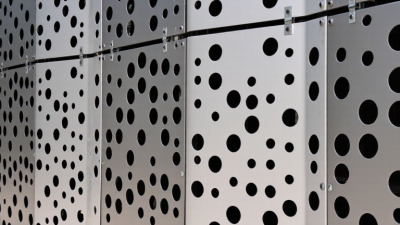
How to Choose Perforated Aluminum Panels?
Choosing Perforated Aluminum Panels involves more than selecting an attractive hole pattern. The right decision affects daylight, ventilation, privacy, acoustics, maintenance, and façade performance. A panel that looks elegant in a sample may appear too dark after installation. It may also create unwanted glare near windows.
Dr. John Straube, a respected building-science educator, emphasizes a practical enclosure principle: “A good enclosure must control rain, air, heat, and vapor.” This idea applies directly to perforated façades. Open-area percentage, panel depth, coating quality, and backup-wall design must work together. Ignoring one factor can weaken the entire system.
Begin with the building’s purpose. A school may need durable panels with safe edges and controlled solar gain. A retail façade may prioritize branding, visibility, and nighttime lighting. Residential projects often require stronger privacy and lower maintenance. Measure the viewing distance. A 6-millimeter hole can look subtle from the street, yet appear highly transparent from inside.
Material thickness matters. Thin sheets may reduce cost, but wind pressure can cause vibration or visible oil-canning. Heavier panels may perform better, although they increase weight and installation demands. The honest answer is not always the most decorative one.
Review samples outdoors, not only in a showroom. Observe them during morning, midday, and evening light. Ask for structural calculations, corrosion guidance, coating data, and cleaning recommendations. Also question the design. Some patterns are beautiful but difficult to fabricate consistently. Good choices balance appearance, performance, budget, and future repair. That balance is imperfect, but it is usually more reliable than choosing by image alone.
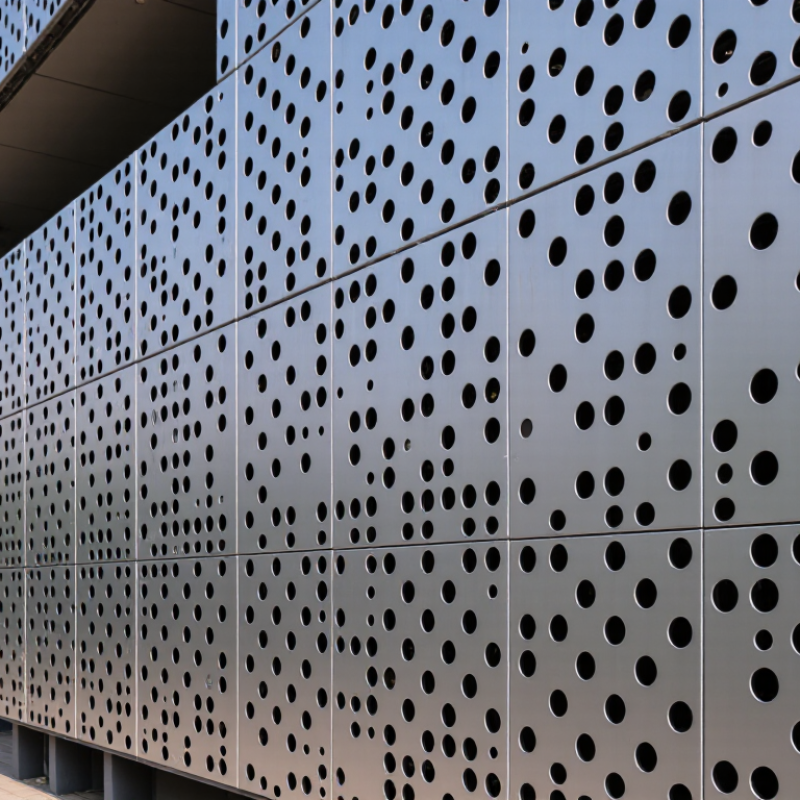
Define the Purpose and Performance Requirements
How to Choose Perforated Aluminum Panels?
Define the Purpose and Performance Requirements
Start with the panel’s job, not its pattern. Is it controlling glare, screening equipment, improving ventilation, or creating acoustic comfort? A perforated aluminum panel cannot solve every problem alone. Its open area, thickness, hole shape, and backing material directly affect performance. For a parking façade, measure sightlines at eye level. For solar control, study the window orientation, seasonal sun angles, and required shading depth. Small design changes matter.
The World Health Organization’s Environmental Noise Guidelines for the European Region recommend less than 30 dB(A) indoors at night for good sleep. A decorative perforated sheet will not achieve that target by itself. It needs an acoustic cavity, insulation, and tested backing. Request laboratory results using recognized standards, rather than trusting a product description. Check wind pressure, deflection, fastener spacing, drainage, and corrosion exposure. Coastal projects need stricter material and coating decisions.
The International Aluminium Institute reports that about 75% of all aluminum ever produced remains in use. That supports aluminum’s long service potential, but only when detailing prevents water traps and galvanic contact. I have seen attractive screens fail because maintenance access was ignored. That mistake is easy to repeat. Prepare a physical mock-up before approval. Test daylight, visibility, cleaning reach, and panel vibration from several viewpoints. Performance is often less perfect than the rendering.
Select the Appropriate Aluminum Alloy and Panel Thickness
Choosing the right aluminum alloy and panel thickness determines whether perforated panels remain flat, secure, and visually consistent. The best choice depends on exposure, span, hole pattern, and installation method.
For interior ceilings, screens, and decorative wall panels, 3003 aluminum often offers useful formability and stable fabrication. It bends cleanly around returns and is suitable for moderate service conditions. In humid rooms or coastal locations, 5052 aluminum is usually a stronger option because it resists corrosion better. It also handles vibration and repeated handling well. 6061 aluminum provides higher strength, but it is less forgiving during forming. Tight bends may show cracking or distortion. Do not guess.
Thickness should match the panel’s unsupported area, not only its overall size. A small panel with dense perforations may perform well at 1.5 mm, while a wide ceiling panel may need 2 mm or more. Heavy-gauge material can improve rigidity, but it also increases weight, cutting effort, and support requirements. Large openings remove material and can reduce stiffness, especially near corners and fasteners. The remaining metal matters.
Review the hole diameter, pitch, open area, and edge distance together. Ask for a sample panel before approving production. Check its flatness with a straightedge, measure the actual thickness with calipers, and inspect the hole edges for burrs. I have seen attractive drawings fail during installation because the chosen alloy could not tolerate the planned return bend. A small prototype often reveals that mistake early. Measure twice. Reconsider the specification when site conditions change.
Determine Hole Patterns, Open Areas, and Visual Effects
Choosing perforated aluminum panels
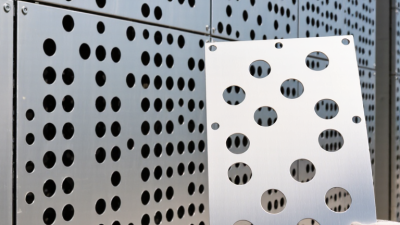
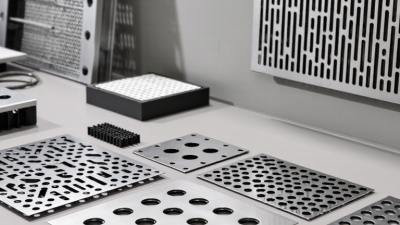
starts with three variables: hole pattern, open area, and visual effect. In field projects, I measure the sample at viewing distance, not only on a desk. Round, staggered holes often create a softer texture and better visual continuity. Square holes appear more ordered. Slotted holes can suggest movement, but they may look visually heavier.
Open area means the percentage of empty surface. A panel with 40% open area contains 40% voids and 60% aluminum. This ratio affects airflow, daylight, privacy, weight, and shading.
For solar control, the International Energy Agency’s Buildings report states that buildings account for about 30% of global energy demand. A carefully selected perforation pattern can reduce glare while preserving filtered daylight. The result depends on orientation, glass performance, and panel distance.
Visual testing remains essential. A 6 mm round hole may look delicate at two meters, yet appear almost solid from across a street. Larger openings can improve transparency, but they may weaken privacy and reveal messy services behind the screen.
ASTM E283 and ASTM C423 offer useful test frameworks for air leakage and acoustic performance, although neither predicts the final façade appearance. I still make mistakes when judging samples under showroom lighting. Outdoor mock-ups are less elegant, but more honest.
Evaluate Panel Size, Mounting Systems, and Installation Needs
How to Choose Perforated Aluminum Panels?
Panel size should match the building grid, wind exposure, and available lifting equipment. Smaller modules usually simplify handling and replacement. However, they create more joints, fasteners, and visual interruptions. A 1,200 × 600 mm panel may suit a sheltered façade, while larger panels require stronger rails and careful deflection checks. The Aluminum Association’s Aluminum Standards and Data reports aluminum’s density at approximately 2.70 g/cm³, but perforation does not automatically make a panel structurally adequate. Open-area percentage, sheet thickness, hole pattern, and edge distance all affect stiffness.
Mounting systems need equal attention. Cassette frames can provide clean lines and controlled alignment. Direct clips may reduce components but demand accurate substrate preparation. Allow movement at every connection. Aluminum expands about 23.6 micrometers per meter per °C, according to engineering material data published by the ASM International materials database. Movement matters. Fixed fasteners across long runs can cause distortion, noise, or loose joints.
Installation planning should include drainage, access, replacement routes, and safe cutting procedures. ASTM E330/E330M evaluates façade assemblies under uniform static air pressure, so request project-specific test evidence rather than relying on attractive samples. The International Energy Agency’s Global Status Report for Buildings and Construction 2023 states that buildings consume about 30% of global final energy. Perforated panels may support shading, but daylight and solar studies should verify performance. I have seen elegant layouts fail because installers lacked tolerance information. That mistake is avoidable.