Best Perforated Metal Sheet Supplier in China?
Choosing the best perforated metal sheet supplier in China depends on more than price or a polished product catalog. The right partner should understand your application, explain material options clearly, and provide evidence that its products match your requirements. Small details matter. A clean sample, consistent hole spacing, and clearly stated sheet thickness can reveal more than a sales promise.
A reliable supplier will ask about your metal type, hole pattern, open area, sheet size, finish, and expected operating conditions. They should also explain available production tolerances and how they inspect finished sheets. Request a sample, a written quotation, and relevant quality documents before placing a large order. If a project needs custom dimensions, confirm how the supplier handles drawings, revisions, packaging, and delivery updates. These checks help reduce avoidable delays and mismatched materials.
No single company is best for every buyer. A supplier suited to architectural screens may not be ideal for filtration components or heavy-duty guards. Compare more than one manufacturer, and verify claims through product records or an independent inspection when the order justifies it. Be cautious when specifications remain vague or answers change between conversations. I would not treat a low quote as proof of value; freight, finishing, and quality control can change the real cost. There is room for judgment here. This guide explores practical ways to assess Chinese suppliers and choose Perforated Metal Sheet products with greater confidence.
Define the Specification: Hole Diameter, Pitch, Sheet Thickness, and Open Area
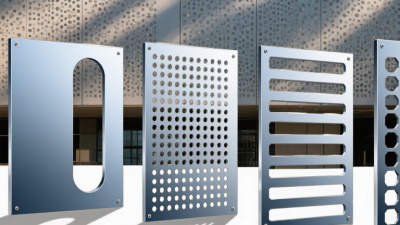
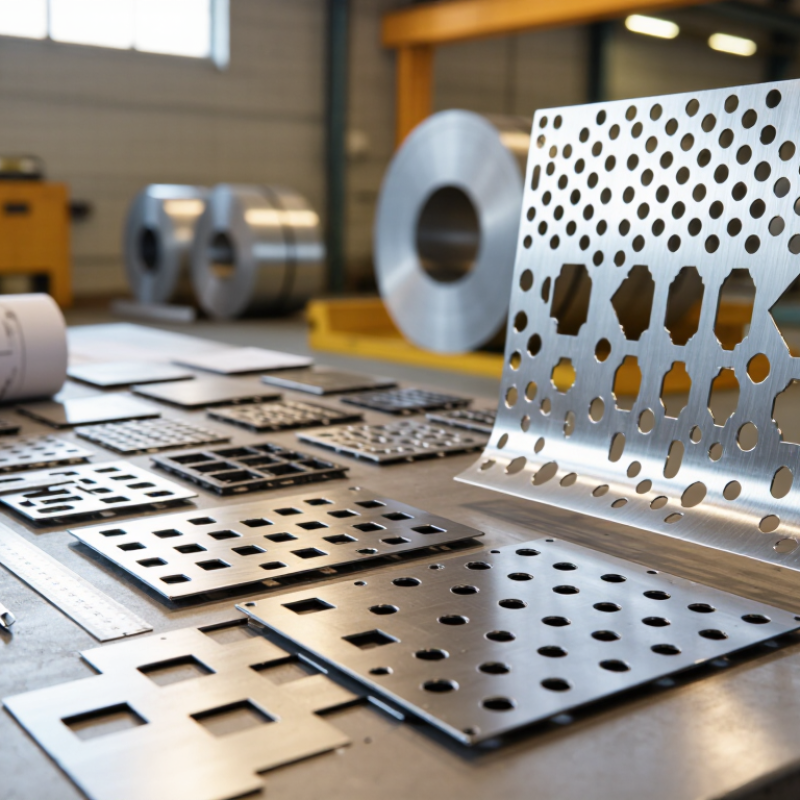
For a perforated metal sheet, define the pattern before comparing supplier quotes. Hole diameter is the clear width of each opening; pitch is the center-to-center distance between neighboring holes. A 6 mm hole on a 9 mm pitch leaves less metal between openings than the same hole on a 12 mm pitch. That difference affects airflow, screening, strength, and appearance. Be precise.
Specify the hole shape and layout too. Round holes in a straight pattern have a different open area from holes in a staggered pattern. For round holes on a square layout, open area can be estimated as π × hole diameter² ÷ (4 × pitch²) × 100. Staggered layouts use a different calculation, so ask the supplier to confirm the figure against the drawing. It is easy to overlook edge margins; holes near a cut edge may weaken the sheet or complicate installation.
Sheet thickness should match the job, not just the preferred price. A thin sheet may suit a light screen, while a thicker sheet can better resist handling and vibration. State the material, thickness, dimensions, tolerances, hole direction, and whether measurements are nominal or finished. Request a sample or inspection report for critical work. One detail may still need revision after a prototype; that is normal, not a reason to leave the specification vague.
Compare Alloys Under ASTM A240: 304 Has 18–20% Cr; 316 Has 2–3% Mo
Choosing a perforated metal sheet supplier in China starts with grade verification, not appearance.
Under ASTM A240, Type 304 contains 18–20% chromium. Type 316 typically contains 16–18% chromium and 2–3% molybdenum. Chromium supports a protective surface film, while molybdenum improves resistance to chloride-related pitting. This difference matters near salt spray, wash-down lines, or coastal air. Alloy alone, though, cannot guarantee a suitable sheet.
Ask for material test certificates linked to each batch. Confirm the standard, grade, thickness, and finish. Compare samples for hole diameter, pitch, open area, edge burrs, and flatness. A 1.5 mm sheet with clean, evenly spaced 6 mm holes can perform differently from a heavier sheet with the same pattern. Request measurements, not just catalog claims. Small details matter. Also check that certificates match the delivered material, not simply a generic grade sheet.
Tips:
For indoor, low-chloride service, 304 may be adequate; for chloride exposure, consider 316 and assess the environment carefully. Inspect a cut edge, where processing marks can be easy to miss. Price is only one factor. I might still overlook a fabrication issue, so test a real sample before approving production.
Calculate Open Area for 60° Staggered Holes: 90.7 × (d/p)²%
For a 60° staggered pattern of circular holes, the standard open-area estimate is 90.7 × (d/p)²%, where d is hole diameter and p is the center-to-center pitch. If holes measure 6 mm and pitch is 8 mm, the estimated open area is 51.0%. The 90.7 factor reflects the geometry of the triangular layout; it is not a measured airflow rate. ISO 7805-1 and ISO 7805-2 provide dimensional references for perforated plates, while this calculation helps compare pattern designs before ordering.
A practical check: measure several holes and pitches on the same sheet, then compare the result with the supplier’s drawing. A small pitch change matters. For example, keeping a 6 mm hole but increasing pitch from 8 mm to 9 mm lowers estimated open area to about 40.3%. Burrs, coating, sheet thickness, and imperfect alignment can also affect the usable opening. The equation assumes clean, circular holes and consistent spacing. Real sheets are less tidy. I would treat the result as a design estimate, not a promise of airflow or screening performance, and request a sample when the application is sensitive to blockage.
Assess Production Controls: Hole Accuracy, Burrs, Flatness, and Traceability
A reliable perforated metal sheet supplier should explain how production quality is measured, not simply promise “tight tolerances.” Ask for the permitted hole-diameter variation and how often operators check it during a run. A caliper can catch obvious drift, while a calibrated optical tool can verify smaller holes across a sample grid. Check more than one sheet. Die wear and material movement can change results over time.
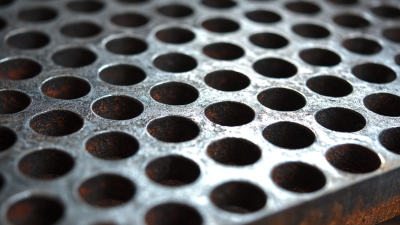
Burrs deserve a hands-on check. Run a gloved finger along the cut edges, then inspect both sides under angled light. Minor burrs may be acceptable for some applications, but sharp projections can complicate handling or assembly. Flatness matters too. Place sheets on a known level surface and note rocking, edge lift, or distortion around dense perforation patterns. Some warping may appear only after cutting or forming, so a production sample is more useful than a polished showroom piece.
Traceability connects these checks to the material you receive. Request records linking each batch to its material grade, thickness, production date, and inspection results. Verify that labels remain attached through packing and shipment. Keep the paperwork. A supplier may have a sound inspection process, yet records can still be incomplete or difficult to match to a specific bundle. That gap is worth discussing before placing a large order.
Best Perforated Metal Sheet Supplier in China? — Assess Production Controls: Hole Accuracy, Burrs, Flatness, and Traceability
Calculated open area for round holes on a triangular (60° staggered) pattern at a constant 10 mm pitch. These geometric examples are not supplier test results. For production acceptance, specify hole diameter and pitch tolerances, burr limits, flatness requirements, and lot-level traceability on the drawing or purchase specification.
Select a China Supplier by Standards, Capacity, Lead Time, and Cost
Selecting a perforated metal sheet supplier in China starts with the specification, not the lowest quote. Confirm the material grade, thickness tolerance, hole diameter, pitch, and open-area percentage in writing. Ask which inspection standards the supplier follows and request sample test records or a current quality certificate. A sample sheet can reveal burrs, uneven spacing, or edge distortion that a product photo may hide. Small details matter.
Capacity should match your order and repeat schedule. Ask about the working width of the punching line, available sheet sizes, and how production changes are managed. A factory may handle a large one-time batch but struggle with frequent, smaller orders. Request a realistic production plan, including time for tooling, inspection, packing, and export preparation. Leave room for delays.
Lead time is not just machining time. Confirm when the clock starts, what happens after drawing approval, and how shipping is estimated. Compare quotations on the same basis: material, finishing, packaging, inspection, and delivery terms. A low unit price may exclude useful checks or protective packing. I would not assume the cheapest offer is the best value; that judgment can be wrong without comparing the full scope. Ask for a written breakdown and clarify any vague line items before approving production.