Inquiry
Form loading...

China Top 10 Perforated Stainless Steel Mesh Suppliers?

Choosing a reliable Perforated Stainless Steel Mesh supplier in China requires more than comparing online prices. Material performance depends on stainless steel grade, sheet thickness, hole diameter, pitch, open area, and edge condition. These details affect airflow, filtration, screening accuracy, corrosion resistance, and installation costs. A supplier may offer attractive samples but struggle with consistent production. That difference matters.

This guide introduces ten Chinese suppliers commonly considered for perforated metal manufacturing and export projects. The evaluation focuses on practical evidence, including factory capability, quality-control procedures, customization experience, documentation, packaging, and communication. Buyers should request material certificates, dimensional inspection reports, production samples, and clear tolerance information before placing an order. Photographs are useful, but they cannot replace inspection records. Small details matter here.

The selected companies may serve construction, machinery, chemical processing, acoustics, food equipment, and architectural applications. Their strengths can differ. One supplier may provide faster prototyping, while another may handle large stainless steel panels more efficiently. Some may support laser cutting, leveling, deburring, or special surface finishes. Buyers should match these capabilities with the actual project requirements.

No ranking is perfectly universal. A supplier suitable for a decorative ceiling may not fit a demanding filtration system. Prices can also change with alloy costs, order quantity, tooling, and shipping terms. This article offers a practical starting point, not a final purchasing decision. Careful verification remains necessary, especially when tolerances are tight and delivery schedules are critical. Mistakes happen, even with experienced suppliers.
China Top 10 Perforated Stainless Steel Mesh Suppliers?

What Is Perforated Stainless Steel Mesh?

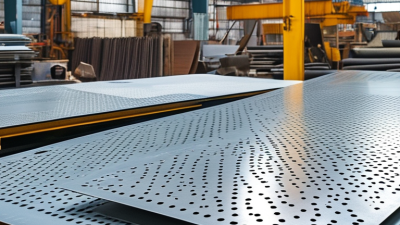
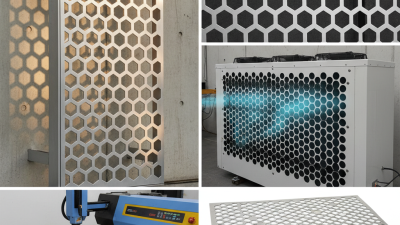
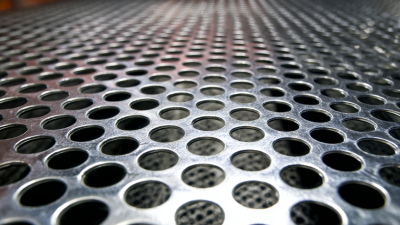
Perforated stainless steel mesh is a metal sheet or panel with regularly formed openings. Manufacturers create these holes by punching, pressing, or laser cutting stainless steel. The result combines airflow, visibility, drainage, and structural strength in one material. Hole shape, diameter, pitch, thickness, and open area determine its performance.

The term “mesh” can be slightly misleading. Technically, perforated sheet has openings cut into one solid surface, while woven mesh uses interlaced wires. Both materials serve screening needs, but they behave differently under load. Stainless steel grades such as 304 suit many indoor and general environments. Grade 316 usually performs better near saltwater or chemical exposure. Selection should follow the actual environment, not only the lowest quotation.

Tips: Ask for a sample before ordering. Check hole size with a caliper and measure sheet thickness at several points. Request an inspection report covering grade, dimensions, surface finish, and open-area tolerance. A drawing should show margins and hole direction clearly. Small mistakes matter. I have seen a suitable pattern fail because its unsupported edge was too narrow. Also, compare suppliers by process control, packaging, cutting accuracy, and technical communication, rather than catalog claims alone. Surface scratches, uneven punching, or warped panels may appear after delivery, so inspection criteria should be agreed in writing.

How China’s Leading Suppliers Are Evaluated

China Top 10 Perforated Stainless Steel Mesh Suppliers?

How China’s Leading Suppliers Are Evaluated

A credible Top 10 list should measure evidence, not catalogue size. The World Stainless Association reported 58.4 million tonnes of global stainless steel production in 2023. China contributed approximately 36.7 million tonnes. This scale supports strong processing capacity, but it does not guarantee consistent perforated mesh quality.

Material traceability comes first. Leading suppliers should provide heat numbers, mill certificates, and chemical composition records. Buyers should verify stainless grades through independent testing when projects are critical. ISO 7806 helps standardize perforation terminology, while agreed drawings must define hole diameter, pitch, open area, thickness, and sheet flatness. A supplier claiming “tight tolerance” should show inspection results.

The details matter.

A practical audit may request five samples from different production batches. Inspectors can measure a 300-by-300-millimeter panel, check burrs by touch, and compare hole spacing with the approved drawing. Welding, leveling, and surface finishing also deserve records. UN Comtrade trade data can help review export experience, but shipment volume alone proves little. A large exporter may still deliver uneven edges or mixed material lots.

I would score suppliers across quality control, production equipment, traceability, testing, delivery performance, and technical communication. Certifications add confidence, yet certificates can become outdated or overly general. That is an uncomfortable weakness in many purchasing decisions. Site audits, third-party inspection, and retained samples provide stronger evidence. Price should be reviewed last, because a cheaper sheet can create costly rework, rejected installation, and uncertain service life.

China Top 10 Perforated Stainless Steel Mesh Suppliers: Evaluation Framework

A neutral 100-point procurement framework for comparing suppliers without using company or brand data.

Product quality receives the highest weighting because perforated stainless steel mesh performance depends on dimensional accuracy, hole consistency, material grade, and surface quality. Customization, certification, production capacity, delivery reliability, and export experience are also important factors when shortlisting suppliers.

China’s Top 10 Perforated Stainless Steel Mesh Suppliers

China’s Top 10 Perforated Stainless Steel Mesh Suppliers should be assessed through evidence, not online visibility. Grand View Research estimates that the global metal mesh market will expand steadily through 2030, supported by construction, filtration, and industrial equipment demand. This growth increases supplier competition, but it also makes quality differences easier to overlook.

A reliable shortlist should compare stainless steel grades, sheet thickness, hole diameter, pitch, and open-area tolerance. For example, a 1.0-millimeter round hole can perform differently when the pitch changes. Requesting material certificates, dimensional inspection records, and corrosion-test results is practical. ISO 9001 certification helps, but it does not replace batch inspection. That distinction matters.

Market reports from MarketsandMarkets identify filtration, automotive, and architectural applications as important metal-mesh demand areas. Suppliers serving these fields should explain tooling limits, edge conditions, flatness, and packaging methods.

Export experience also deserves attention, especially for container loading and moisture protection. A ranking can still be imperfect. Price often receives too much attention, while repeatability receives too little. A useful evaluation should score technical control, delivery reliability, customization ability, and documented experience. The strongest candidates are not always the largest factories. They are the suppliers that can prove consistent results across several production batches.

Key Differences in Products, Services, and Manufacturing Capabilities

China’s Top 10 Perforated Stainless Steel Mesh Suppliers?

Key Differences in Products, Services, and Manufacturing Capabilities

When comparing China’s top 10 perforated stainless steel mesh suppliers, product range is only the starting point. Some produce standard sheets with round holes, while others handle slots, patterns, coils, and formed panels. Hole diameter, pitch, open area, thickness, and alloy grade affect strength and filtration. A sample can reveal burrs, uneven edges, or weak consistency. Small details matter.

Service separates capable manufacturers from simple traders. Strong suppliers provide drawings, tolerance reviews, material certificates, sample approval, and secure packaging. They explain whether punching, laser cutting, or another process suits the design. Their engineers should discuss corrosion exposure, cleaning needs, and installation. Fast replies help, but technical accuracy matters more. Price alone misleads.

Manufacturing capability deserves closer inspection. Modern presses may offer better repeatability, yet maintenance, tooling control, and inspection discipline remain important. Ask for production photos, inspection records, and realistic lead times. Export experience also affects labeling, packing, and document accuracy. Some suppliers promise every finish and tolerance, but cannot prove capacity. That is a warning. One approved sample does not guarantee a long production run. On-site or third-party verification can expose gaps before they become expensive.

How to Select the Best Supplier for Your Application

Selecting a perforated stainless steel mesh supplier in China requires more than comparing the lowest quotation. Your application should guide every decision. Define the opening size, sheet thickness, hole pattern, material grade, width, length, and required tolerance. A filter panel may need precise round holes, while a guard may prioritize rigidity and clean edges. Ask for a material certificate and recent inspection records. These documents show whether the supplier controls production consistently.

Request samples made with the same stainless steel grade and tooling proposed for production. Check burrs, flatness, hole spacing, weld compatibility, and surface finish under practical lighting. Measure several areas, not only the best-looking corner. It is a small step. It can expose uneven punching or distortion. Discuss forming, cutting, packaging, and replacement procedures before placing an order. A capable supplier should explain machine limits clearly instead of promising every specification. Confirm production capacity, lead times, traceability, and communication responsibilities in writing.

A supplier comparison table should score quality control, technical support, response speed, packaging, and total delivered cost. Price still matters, but unstable openings can increase installation waste. Ask how complaints are investigated and corrective actions are verified. Photos help. They are not proof. An on-site audit or independent inspection provides stronger evidence for critical projects. I have found that buyers often focus heavily on samples, then neglect batch consistency. That weakness deserves honest attention. Leave room for trial orders and measurable acceptance criteria, even when the supplier appears experienced.

China Top 10 Perforated Stainless Steel Mesh Suppliers? - How to Select the Best Supplier for Your Application

Anonymous supplier benchmark based on common stainless steel mesh and perforated sheet specifications

Rank Anonymous Supplier Profile Best-Fit Application Common Stainless Steel Grades Typical Opening or Aperture Range Typical Wire Diameter or Sheet Thickness Available Product Form Relevant Standards to Request Quality Documents to Verify Key Selection Advantage
1 Supplier Profile 01 Architectural façades, ceiling panels, balustrades and decorative screens 304316316L Perforated openings approximately 1–20 mm; woven mesh openings typically 1–25 mm Perforated sheet: about 0.8–3.0 mm; woven wire: about 0.5–2.0 mm Perforated sheet, woven mesh, cut-to-size panels and formed parts ASTM A240 for stainless sheet; ISO 9044 for industrial woven wire cloth Material test report, dimensional inspection report, surface-finish sample and packing inspection Strong design flexibility and a wide choice of open-area patterns
2 Supplier Profile 02 Liquid filtration, chemical processing and food-processing screens 304L316L Approximately 20–500 μm for fine woven filtration mesh Fine wire commonly about 0.02–0.15 mm Plain weave, twill weave, Dutch weave, filter discs and filter tubes ISO 9044; ASTM E2016; ASTM E11 where applicable for sieve analysis Mesh-count report, aperture test, wire-diameter report, chemical composition and pressure-test data Suitable for controlled particle retention and repeatable filtration performance
3 Supplier Profile 03 Mining screens, vibrating screens and aggregate separation 304316410 Approximately 2–100 mm, depending on screening duty and screen design Woven wire commonly about 1.0–6.0 mm Square mesh, rectangular opening, heavy-duty woven screen and hooked panels ISO 9044; ASTM E2016; application-specific wear and tension requirements Wire-diameter verification, tensile-strength data, aperture inspection and weld or hook inspection Higher mechanical strength and improved resistance to abrasion in demanding service
4 Supplier Profile 04 Air intake guards, ventilation grilles, machine guards and safety panels 304304L Perforated openings commonly about 2–12 mm, with open area selected for airflow Sheet thickness commonly about 0.8–2.5 mm Perforated panels, expanded-style guards, framed screens and roll-formed parts ASTM A240; ISO 2768 for general dimensional tolerances where agreed Open-area calculation, flatness report, burr inspection and dimensional inspection report Good balance between airflow, visibility, impact protection and material efficiency
5 Supplier Profile 05 Marine equipment, coastal construction and salt-exposure environments 316316L Approximately 1–25 mm for perforated sheet or woven mesh applications Sheet thickness about 1.0–4.0 mm; wire diameter about 0.5–3.0 mm Perforated sheet, woven mesh, fabricated grilles and welded assemblies ASTM A240; ASTM A480; ISO 9044 for woven mesh Mill test certificate, molybdenum-content verification, passivation record and corrosion-resistance test when specified Improved chloride resistance compared with standard 304 stainless steel
6 Supplier Profile 06 High-temperature air filtration, furnace parts and heat-treatment equipment 304H310S316L Approximately 0.2–10 mm, depending on temperature and filtration requirements Wire diameter about 0.15–2.5 mm; sheet thickness about 0.8–3.0 mm Woven mesh belts, filter elements, perforated plates and heat-resistant assemblies ASTM A240; ISO 9044; temperature-service requirements defined in the purchase specification Heat-resistance grade certificate, dimensional report, weld inspection and operating-temperature confirmation Better suitability for elevated-temperature service when the correct alloy is selected
7 Supplier Profile 07 Pharmaceutical, laboratory and hygienic processing equipment 316L304L Approximately 20–300 μm for filtration mesh; 1–10 mm for support screens Fine wire about 0.02–0.20 mm; support sheet about 1.0–3.0 mm Filter discs, cylinders, sintered supports, woven mesh and electropolished parts ISO 9044; ASTM E2016; ASTM A240 for sheet components Surface-roughness report, material traceability, cleaning declaration, weld documentation and passivation record Supports cleanability, corrosion resistance and controlled surface quality
8 Supplier Profile 08 Automotive intake systems, exhaust components and engine protection 304409430 Approximately 1–15 mm for perforated sheet and protective mesh Sheet thickness about 0.6–2.0 mm; wire diameter about 0.4–1.5 mm Perforated sheet, stamped screens, formed filters and welded assemblies ASTM A240; ASTM A480; customer-specific forming and dimensional requirements Formability test, dimensional capability report, weld inspection and material traceability Efficient production of formed parts with repeatable dimensions and controlled open area
9 Supplier Profile 09 Small-batch prototypes, laboratory parts and custom engineering projects 304316L430 Custom apertures from approximately 0.5–30 mm, subject to tooling and material limits Sheet thickness about 0.5–3.0 mm; wire diameter about 0.05–2.0 mm Laser-cut or perforated panels, precision mesh, discs, rings and custom frames ASTM A240; ISO 9044; ISO 2768 where general tolerances are agreed First-article inspection, drawing approval, sample report and complete dimensional records Lower tooling risk and greater flexibility for low-volume or development orders
10 Supplier Profile 10 High-volume industrial projects requiring repeat supply and export packaging 304316L430 Approximately 1–50 mm for perforated panels; up to about 100 mm for heavy-duty screen designs Sheet thickness about 0.8–6.0 mm; wire diameter about 0.5–6.0 mm Coils, sheets, rolls, welded panels, cut-to-size parts and assembled modules ASTM A240; ASTM A480; ISO 9044; EN 10204 inspection documentation when required Quality plan, batch traceability, capacity statement, pre-shipment inspection and packaging specification Better suited to stable repeat orders, container shipments and standardized quality control

Selection note: The ranges shown are industry reference ranges rather than verified claims for any named company. Confirm alloy, aperture, open area, tolerance, finish, testing requirements, minimum order quantity and lead time through a formal quotation and sample approval.